
THE SHORT ANSWER
Low-VOC does not mean odorless, emission-free or automatically suitable for immediate occupancy. The label may address a regulatory definition rather than every indoor-air concern. Identify the exact products, follow their use and ventilation instructions, and investigate persistent odor instead of repeatedly adding coatings. Odor alone cannot quantify exposure or establish a universal safe time to return.
Understand what the label answers
A low-VOC or no-VOC claim can sound like a complete indoor-air guarantee, but it answers a narrower question. EPA's explanation of household-product VOC regulation describes why regulatory definitions and total VOC values do not by themselves establish that one product is safer indoors than another. The individual chemicals and use conditions matter.
That does not make product labels useless. It means they should be read alongside technical and safety information and any relevant emissions documentation. Avoid treating the absence of a strong smell as proof of no exposure, or a noticeable odor as a measurement of a specific hazard. A homeowner can make a more useful decision by identifying the product and conditions than by arguing over whether the marketing phrase should have prevented every odor.
Identify all products used in the room
Paint may be only one of several new materials. Primers, patching products, adhesives, cabinet finishes, flooring and cleaners can contribute odors. Record the exact names, application dates and locations rather than assuming the most visible new coating is the source.
The persistent-odor discussion behind this article included uncertainty about the source and suggestions to paint over it again. That uncertainty is important. Adding another coating before identifying the original materials can introduce more variables and delay diagnosis. Ask the applicator for product records and obtain the current technical and safety sheets. Include tinting or a specialty coating when applicable. A statement that the room received ordinary paint is not enough to compare the installation with the manufacturer's intended use and cure conditions.
Distinguish surface drying from completed cure
A coating can become dry to touch before it reaches its intended service properties. Conditions such as temperature, humidity, film thickness and air movement affect the process. The time before recoating may differ from the time before washing, closing painted surfaces together or returning the room to a particular use.
Use the manufacturer's instructions for the actual products and document how they were applied. Do not assume that opening a window for a fixed number of hours guarantees readiness in every room. EPA's remodeling guidance recommends attention to product emissions and appropriate use practices; it does not turn one elapsed-time rule into a universal clearance test. If the work was applied outside the specified conditions, ask the manufacturer what assessment is needed rather than simply waiting an arbitrary extra day.
Use ventilation within a suitable plan
Ventilation can be part of controlling emissions during and after finishing, but it needs to suit the building and the products. Follow the manufacturer's directions and the project's indoor-air plan. A room with no practical way to ventilate may require a different work sequence or temporary occupancy arrangement.
Do not improvise aggressive exhaust without considering the building's combustion appliances and other pressure effects. The appropriate trade should assess those conditions when relevant. Avoid trying to bake a room with excessive heat to force an odor away; that can depart from product instructions and create additional problems. Keep sensitive occupants away from active work as the plan requires. If anyone develops concerning symptoms, leave the affected environment and seek appropriate medical or emergency advice rather than using the smell as a basis for self-diagnosis.
Investigate persistent or unusual odor systematically
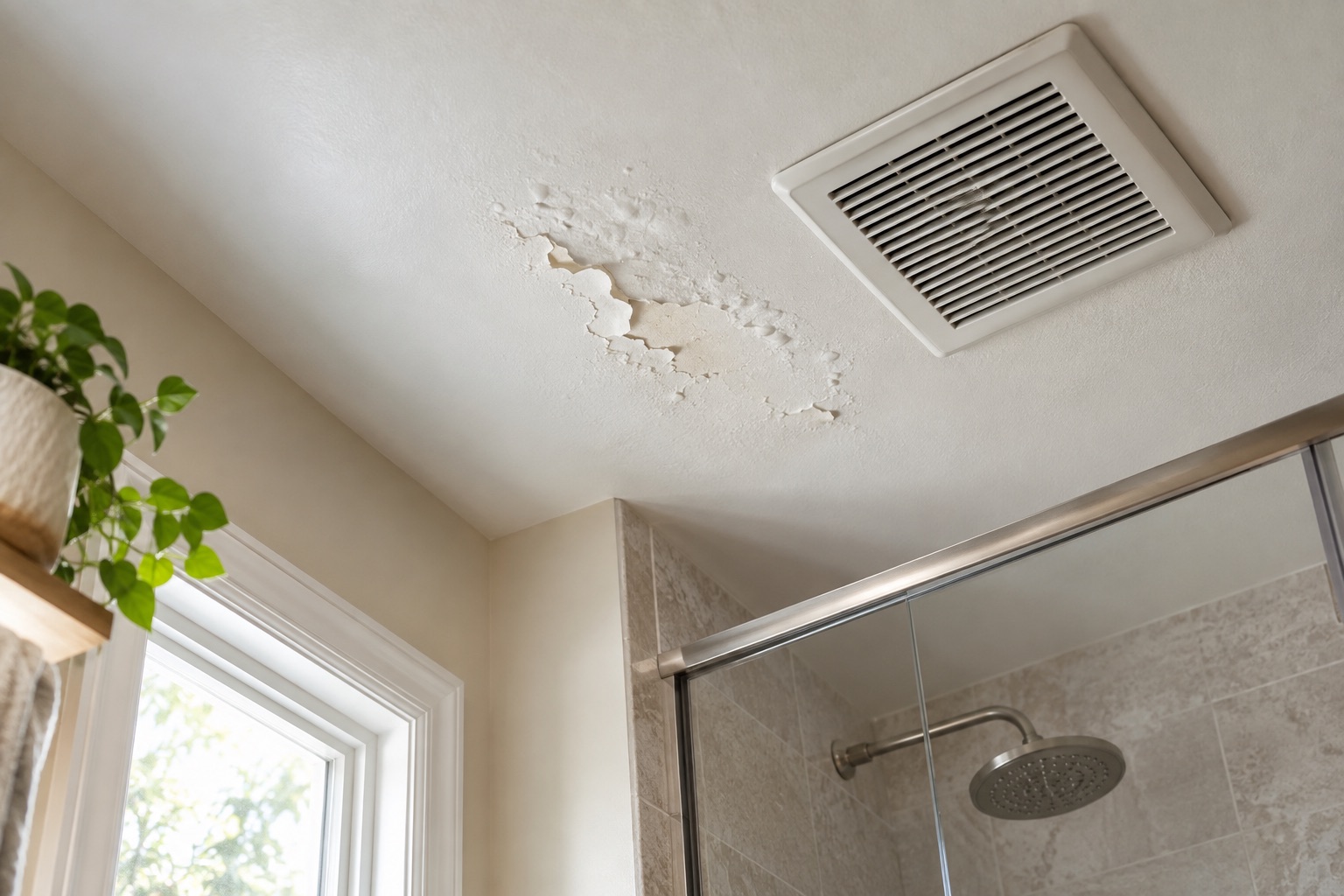
If odor remains beyond what the product supplier expects under the recorded conditions, review the application history and inspect for other sources. Damp materials, an old or improperly stored product, contamination or an unrelated building problem may need consideration. None can be confirmed from the odor description alone.
Document when the odor is strongest, whether it is localized and whether it changes with shower use, heat or another activity. Share that record with the manufacturer, applicator or an appropriate indoor-environment professional. Avoid relying on bowls of household substances, fragrances or an ordinary particle filter as proof that the source has been controlled. Some devices affect particular pollutants and not others. The useful goal is to understand and address the source or exposure conditions, not merely to mask the odor.
Do not assume another coat will seal the problem away
A new coating can be appropriate in a specifically evaluated repair system, but it should not be selected as a blind response to odor. Compatibility, adhesion, moisture and the condition of the underlying coating still matter. A proposed sealer should come with an explanation of what it is intended to address and what evidence supports that use.
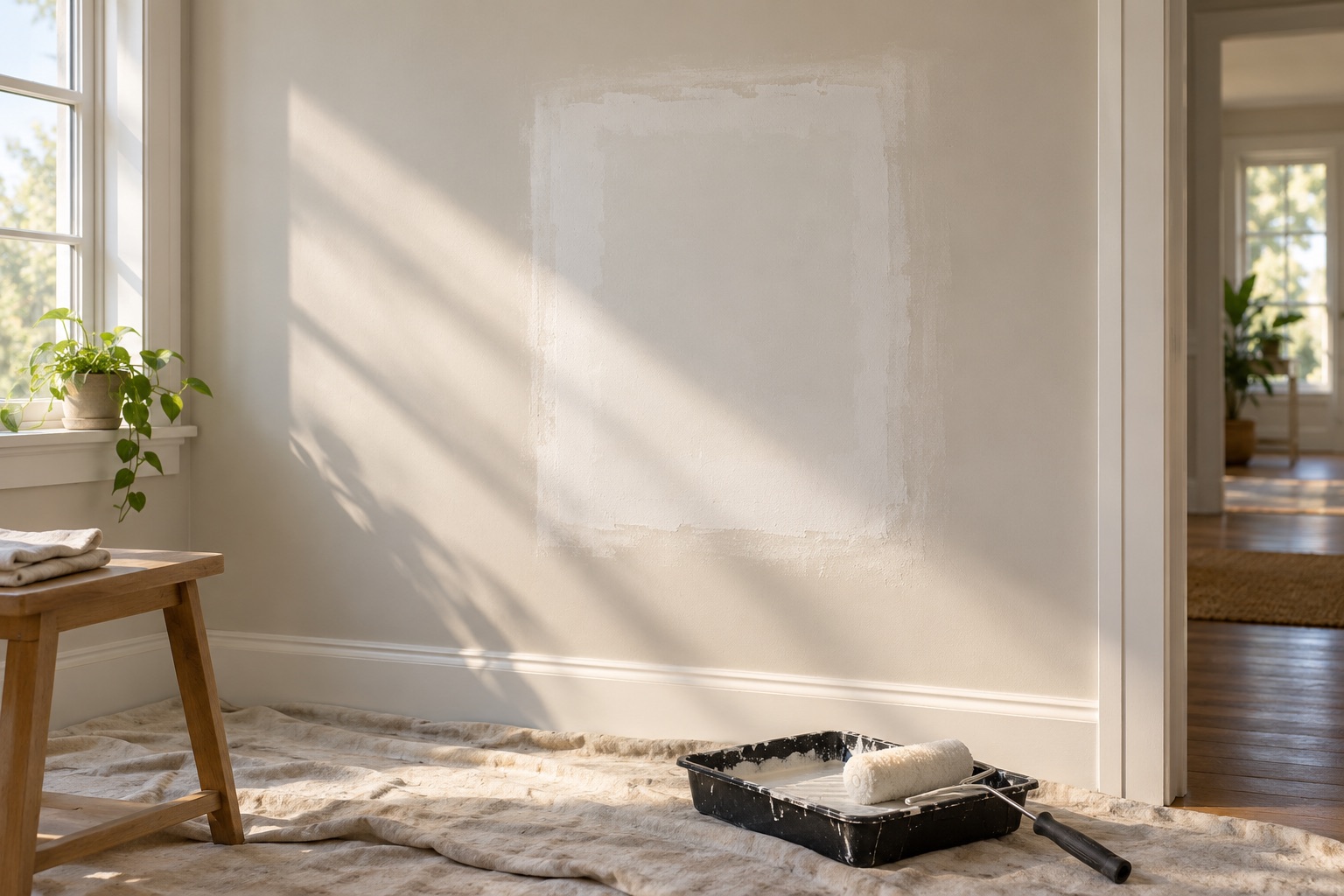
Sanding away an unidentified coating also creates dust and may expose older layers. Resolve relevant hazards before disturbing the surface. For a hypothetical recently painted apartment with several new finishes, another wall coat could leave the actual source unchanged while complicating the material history. Ask the responsible parties to identify the product and application issue first. A controlled test or professional assessment may be more informative than repeating the entire painting job.
Make the next project easier to evaluate
Before painting, select products appropriate to the room and retain their instructions. Plan ventilation, occupant separation and cure time as part of the work, especially where the space must return quickly to daily use. Confirm how the applicator will record products and any substitutions.
At handoff, keep application dates, product names and care instructions. Judge readiness according to the relevant guidance and any project-specific assessment, not a slogan or a universal promise that low-VOC paint is safe immediately. If a household member has known sensitivities or health concerns, incorporate appropriate professional advice into planning. The practical benefit of this approach is traceability: if a problem occurs, there is enough information to investigate it instead of guessing which layer, chemical or room condition might be responsible.
BEFORE YOU PROCEED
Your project checklist
- Record every coating, adhesive and finish used in the room.
- Read technical and safety information beyond the VOC label.
- Distinguish recoat time from service and cleaning readiness.
- Plan suitable ventilation and temporary occupancy arrangements.
- Document persistent odor patterns for a qualified assessment.
- Avoid adding another coating before the source is understood.
Questions that come up next
Does zero-VOC mean no chemicals are emitted?
No. The label does not establish the absence of all emissions or every indoor-air concern.
Can odor tell me whether the room is safe?
Odor alone cannot quantify exposure or set a safe re-entry time. Use product guidance and appropriate assessment.
EVIDENCE & SCOPE
Sources for this guide
Applies to: United States general material and workmanship guidance; selected-product instructions and applicable local requirements control.
Reddit discussions identify questions and experiences, not verified diagnoses or code requirements. Technical claims should be read with the linked primary source, product instructions and local requirements.
- EPA: Addressing Indoor Environmental Concerns During Remodelinggovernment
Painting, low-emitting products and old-coating hazards. Indexed US federal guidance reviewed on painting and indoor-air concerns.
- EPA: VOC Regulation in Household Productsgovernment
Why low/no VOC labels do not alone establish indoor-air safety. US federal indoor-air guidance; odor and VOC labels alone do not establish exposure or reentry conditions.
- I moved into an apartment with a paint odor that won't go away, even after a month of airing out. I'd like to repaint with a no-VOC paint so that the smell goes away. Do I need to sand off the old paint to completely remove the odor or will the new coat of completely seal it in?reddit
Persistent post-painting odor drives unsafe assumptions that a no-VOC overcoat guarantees a remedy. Full thread text reviewed. This is an individual homeowner account.