THE SHORT ANSWER
A bouncy vinyl plank floor usually needs investigation of the assembly beneath and around the planks. Low spots, excessive cushioning, damaged joints or restrained movement can produce similar sensations. Identify the product, map the affected areas and compare measured conditions with its installation guide. Adding screws, glue or filler without finding the cause can make a repair harder.
Identify the floor before diagnosing its movement
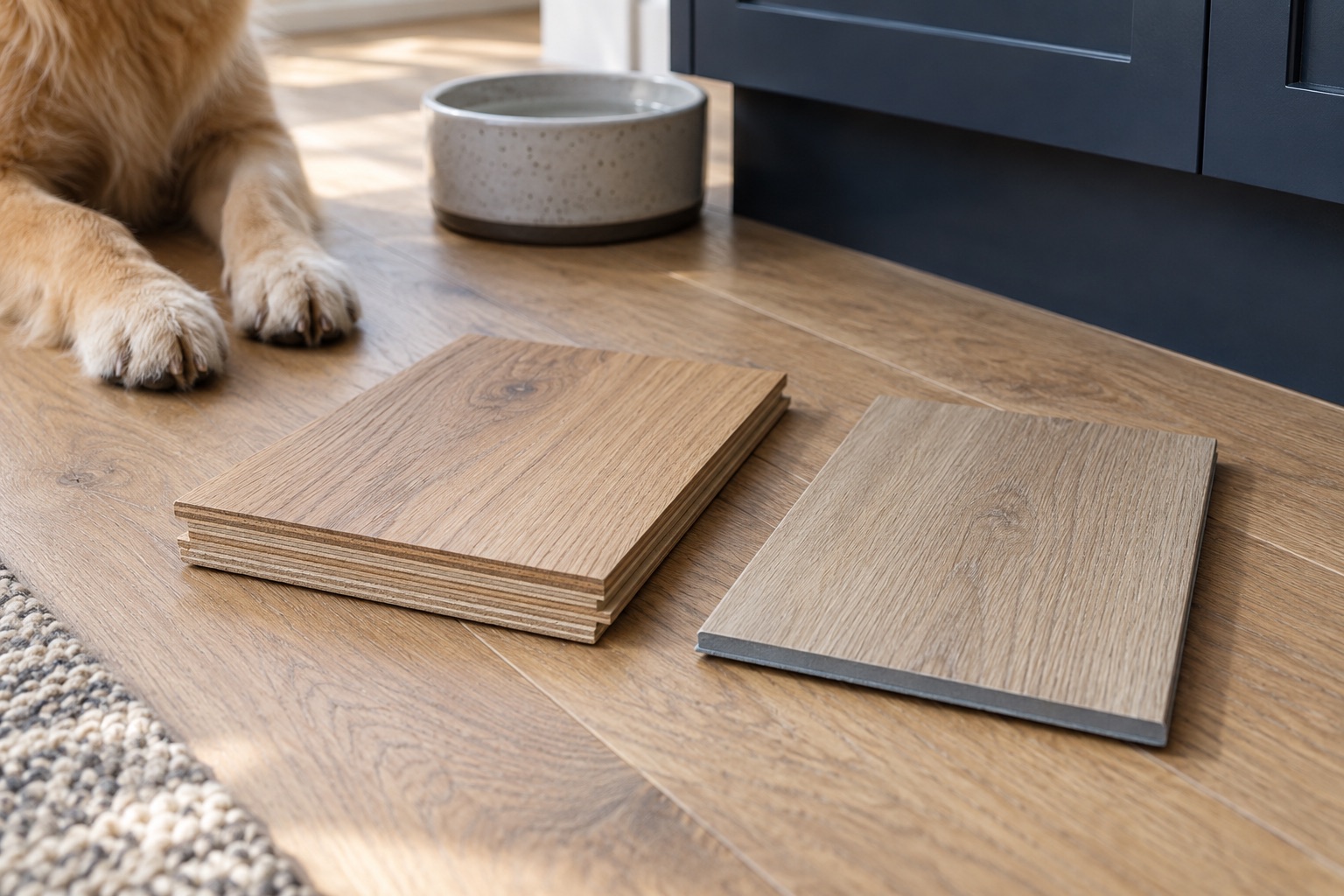
In one discussion of a newly installed bouncy floor, the owner initially called the material hardwood. That matters because a nailed wood floor, a glued resilient floor and a floating click floor should not be diagnosed by the same assumptions. Find a leftover carton, invoice or loose sample and establish the model and installation method.
Describe what you feel rather than immediately naming the cause. Does a plank move down and return under a foot? Does the entire area feel springy? Is there a ridge, an open joint or a clicking sound? Note whether the symptom occurs in the middle of a room, near a doorway, alongside a cabinet or across a subfloor seam. These observations help an installer distinguish local support problems from broader floor movement.
Map the symptom under ordinary use
Walk the floor in a repeatable path and record affected locations on a simple plan. Photograph joints before and after ordinary foot pressure if movement can be shown without forcing the planks. Note whether the condition appeared immediately or developed after weather changes, a leak or appliance replacement. Avoid jumping or repeatedly flexing a suspect joint to demonstrate it.
A separate homeowner thread described deliberately leaving low areas during preparation and then worrying about future failure. The useful question is not whether the movement is tolerable today. It is whether the substrate supports the product within its stated requirements. A narrow soft area at a panel seam can deserve attention even when the room looks flat. Conversely, a sound heard underfoot alone does not prove that the same repair is needed everywhere.
Measure flatness rather than relying on appearance
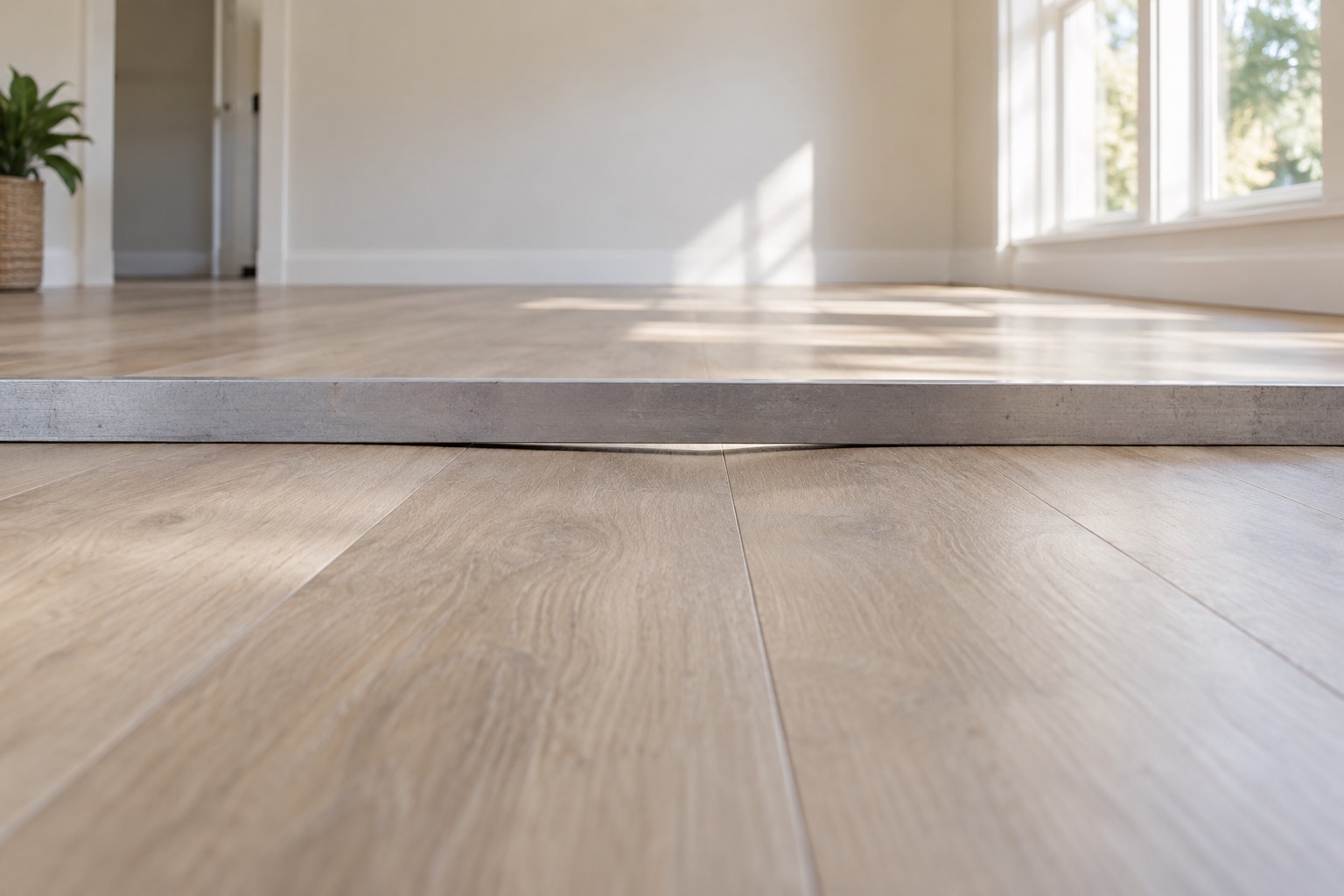
A floor can slope consistently while remaining flat enough for a selected covering. It can also look level overall while containing a small hollow that lets a plank flex. Ask the installer to use the measuring method and tolerance in the actual installation guide, then mark the high and low areas rather than declaring the room acceptable by eye.
Shaw's SPC installation guidance identifies flatness and structural soundness as preparation requirements. The COREtec Scratchless guide likewise provides specific subfloor limits. These are product examples, not universal numbers for every vinyl floor. Obtain the document that matches your carton. If the floor covering is already installed, a straightedge on top may help locate an area of concern, but it does not fully establish the shape or condition of the concealed substrate. Opening a controlled area may be necessary.
Check cushioning and layers
More underlayment is not automatically better. Some products have an attached pad and allow only specified additional layers. Extra softness can change how a locking joint is supported. An old cushioned floor left beneath the installation can create a similar problem even when nobody added a new pad.
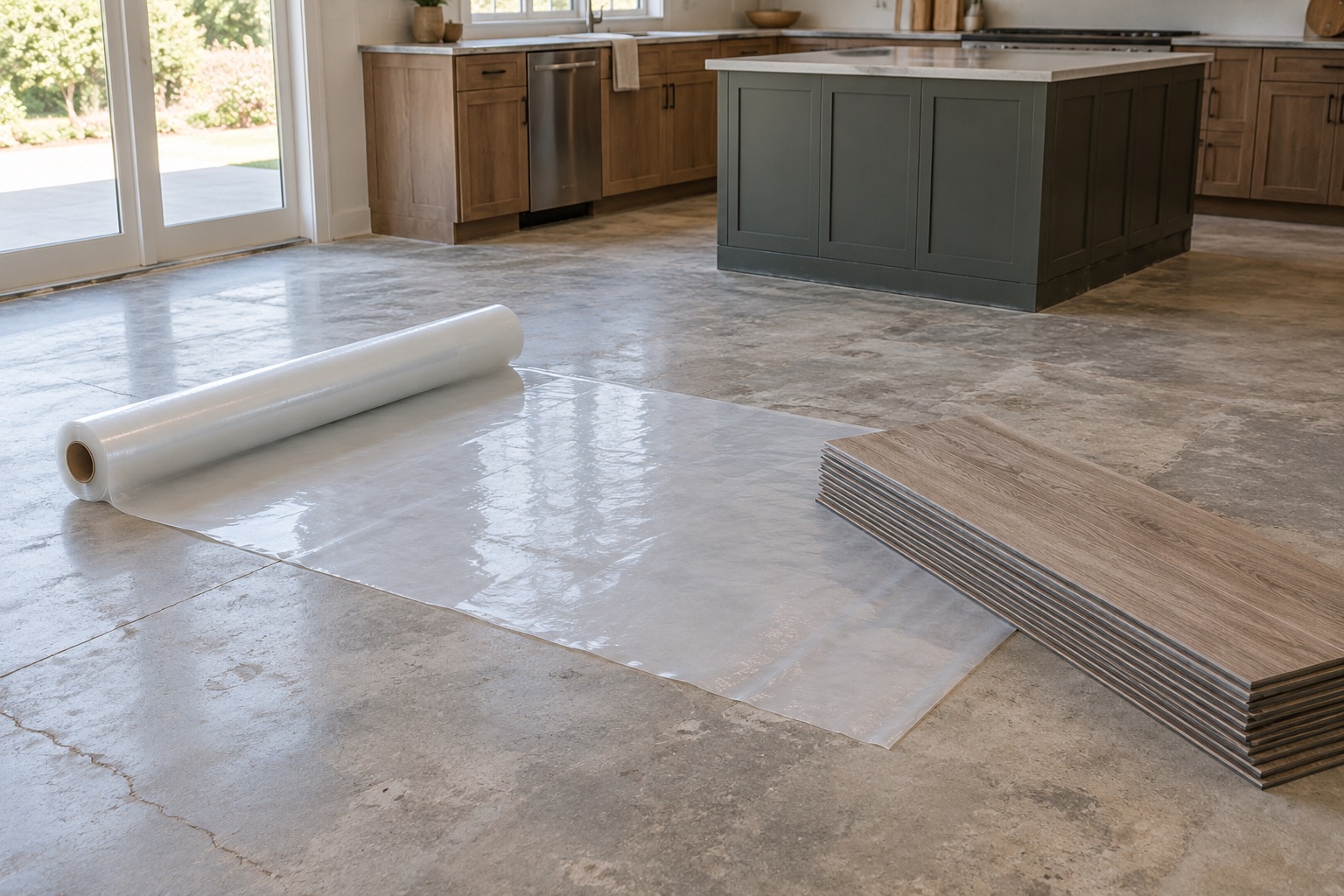
Ask for the complete layer sequence from framing or slab to finished plank. Include old coverings, patching, vapor-control materials and underlayment. Compare each with the selected manufacturer's approved substrates. Do not confuse a thin vapor retarder with a cushioning pad; they serve different purposes. If a product restriction was overlooked, the remedy should address the incompatible layer. Injecting material into random voids may change local support or bond parts of a floating floor, and should not be attempted without a documented repair method for that product.
Look for restraints at the perimeter and fixed objects
A floating floor needs the movement provisions required by its guide. Tight door jambs, fixed cabinetry, fasteners through the planks or trim pressed firmly onto them may restrain that movement. The resulting symptom can appear away from the actual restraint, so a soft spot does not identify where to cut.
Inspect accessible edges with an installer and document what is found. Do not remove large runs of trim or cut beside an island before checking for concealed services and establishing how the floor is meant to move. Some flooring lines have specific installation exceptions around cabinets; those exceptions cannot be borrowed for another model. If the proposed repair involves relief cuts, ask where they will be concealed, how the edge will be finished and how the remaining installation will satisfy its guide.
Separate surface repair from substrate repair
Once the cause is documented, a repair can be scoped. A localized damaged lock over an otherwise suitable substrate is different from repeated low spots across a room. Replacing planks without correcting unsupported areas can reproduce the failure. Flattening the substrate may require removing a much larger section than the visible symptom suggests.
Ask whether removed planks can realistically be reused and how many spare pieces are available. Include trim, transitions and appliance access in the scope. If the subfloor itself moves, feels soft or shows moisture damage, the flooring specialist may need another qualified trade to evaluate it before reinstallation. A covering is not a structural repair. Set the order clearly: establish a sound dry substrate, correct the necessary preparation, reinstall the approved layers, then inspect the finished joints and movement.
Agree on acceptance before closing the floor
A useful repair record includes the affected-area map, photographs of the exposed substrate, measured flatness results and the product instructions used. Record any changed underlayment and replaced planks. That gives both parties a clearer standard than a promise that the floor will feel better.
After reinstallation, walk the repaired and adjoining areas under normal conditions. Check that joints remain properly engaged and transitions do not introduce a new restraint. Ask which changes warrant a return visit and how to report them. Do not demand that every sound prove failure, but do not accept persistent visible joint movement solely because floating floors are said to move. The question is whether the assembled floor is supported and installed as its manufacturer requires, with an explanation for any remaining symptom.
BEFORE YOU PROCEED
Your project checklist
- Find the product model and confirm floating versus bonded installation.
- Map movement, noise and open joints separately.
- Document flatness measurements against the correct guide.
- Identify every underlayment and existing-floor layer.
- Check accessible restraints at jambs, trim and cabinets.
- Require substrate correction before damaged planks are replaced.
Questions that come up next
Will a bouncy spot settle by itself?
Do not assume so. Unsupported or restrained planks need a cause assessment; waiting does not establish compliance.
Can expanding foam fix the hollow area?
Only consider a manufacturer-approved repair. Uncontrolled injection can distort or pin a floating floor and obscure the original problem.
EVIDENCE & SCOPE
Sources for this guide
Applies to: United States general material and workmanship guidance; selected-product instructions and applicable local requirements control.
Reddit discussions identify questions and experiences, not verified diagnoses or code requirements. Technical claims should be read with the linked primary source, product instructions and local requirements.
- COREtec Scratchless Installationmanufacturer
Subfloor flatness, moisture tests, expansion spacing, cabinet-specific glue-down exception. Installation details are specific to COREtec Scratchless, including its cabinet provisions.
- LVP with small bouncereddit
New floating planks move over low spots; owner asks whether movement will cause joint failure. Search excerpt reviewed; the full discussion was not available during research. This is an individual homeowner account.
- New hardwood floor feels uneven and “bouncy” in spots. How can I fix this?reddit
Buyer misidentifies flooring and gets conflicting explanations involving flatness and tight installation. Search excerpt reviewed; the full discussion was not available during research. This is an individual homeowner account.
- Shaw: Resilient Installation Guidelines for SPC Productsmanufacturer
Flatness, substrate condition and floating rigid-core installation. Indexed manufacturer installation guidance reviewed; numerical requirements are product-specific.