THE SHORT ANSWER
A cold but humid house needs a moisture and HVAC investigation, not simply a lower thermostat setting. Cooling removes heat, while dehumidification removes water vapor. Check the humidity measurement, moisture sources, ventilation and equipment behavior together. Oversizing can contribute, but it is only one possible explanation for a home that reaches temperature without feeling dry.
Confirm the condition with usable measurements
Record temperature and relative humidity in occupied rooms at several relevant times. Note weather, thermostat settings and recent activities such as showers or cooking. Use an instrument suitable for the purpose and avoid placing it in a supply airstream or direct sunlight. If the reading seems inconsistent with other observations, compare it with another suitable device before diagnosing the house.
The researched mini-split owner described acceptable temperatures, persistent humidity and a dry mode that overcooled the rooms. That combination identifies a comfort problem but does not prove the system size is the only cause. A useful service request includes the pattern and operating settings, allowing the contractor to investigate more than the thermostat's current temperature.
Separate sensible cooling from moisture removal
The amount of heat that must be removed to lower temperature differs from the moisture load that must be removed to control humidity. These demands change differently with weather and occupancy. A home may need relatively little temperature reduction on a mild humid day while still receiving moisture from occupants or outdoor air.
PNNL's dehumidification guidance explains this sensible and latent load distinction. It is the foundation for the investigation, not a diagnosis by itself. Ask the contractor how the existing system is expected to manage both demands under the conditions you recorded. An explanation based only on the thermostat reaching its setpoint leaves the moisture side of the problem unanswered.
Look for moisture sources before changing equipment
Check for known plumbing or rain leaks, damp crawlspaces, indoor drying and exhaust that does not reach outdoors. Review humidifier use where present. These conditions can add moisture beyond what the HVAC system was intended to handle. A dehumidifier may reduce the symptom while a damaging leak continues, so source correction should remain explicit.
The inspection should follow evidence. A musty odor in one room does not justify assuming the entire house has hidden mold, and a high humidity reading does not locate a leak. Ask what observations support each suspected source and what has been ruled out. The goal is a manageable list of hypotheses that can be checked, not an expanding collection of unverified explanations.
Examine runtime and control behavior
Record whether the system runs steadily, cycles briefly or behaves differently across rooms. Note fan settings and any automatic or dry modes. Do not repeatedly change multiple settings during the diagnostic period; that makes patterns harder to interpret. Have the service provider explain which controls are appropriate for the exact equipment and what each mode changes.
Oversizing can contribute to short cooling cycles, but short cycling can have other causes. Likewise, continuous operation does not prove good moisture control. Ask for an assessment that considers equipment selection, airflow, controls and maintenance condition together. Avoid bypassing safeguards or making refrigerant adjustments based on online advice; those are qualified service tasks, not homeowner experiments.
Revisit selection if the house or system changed
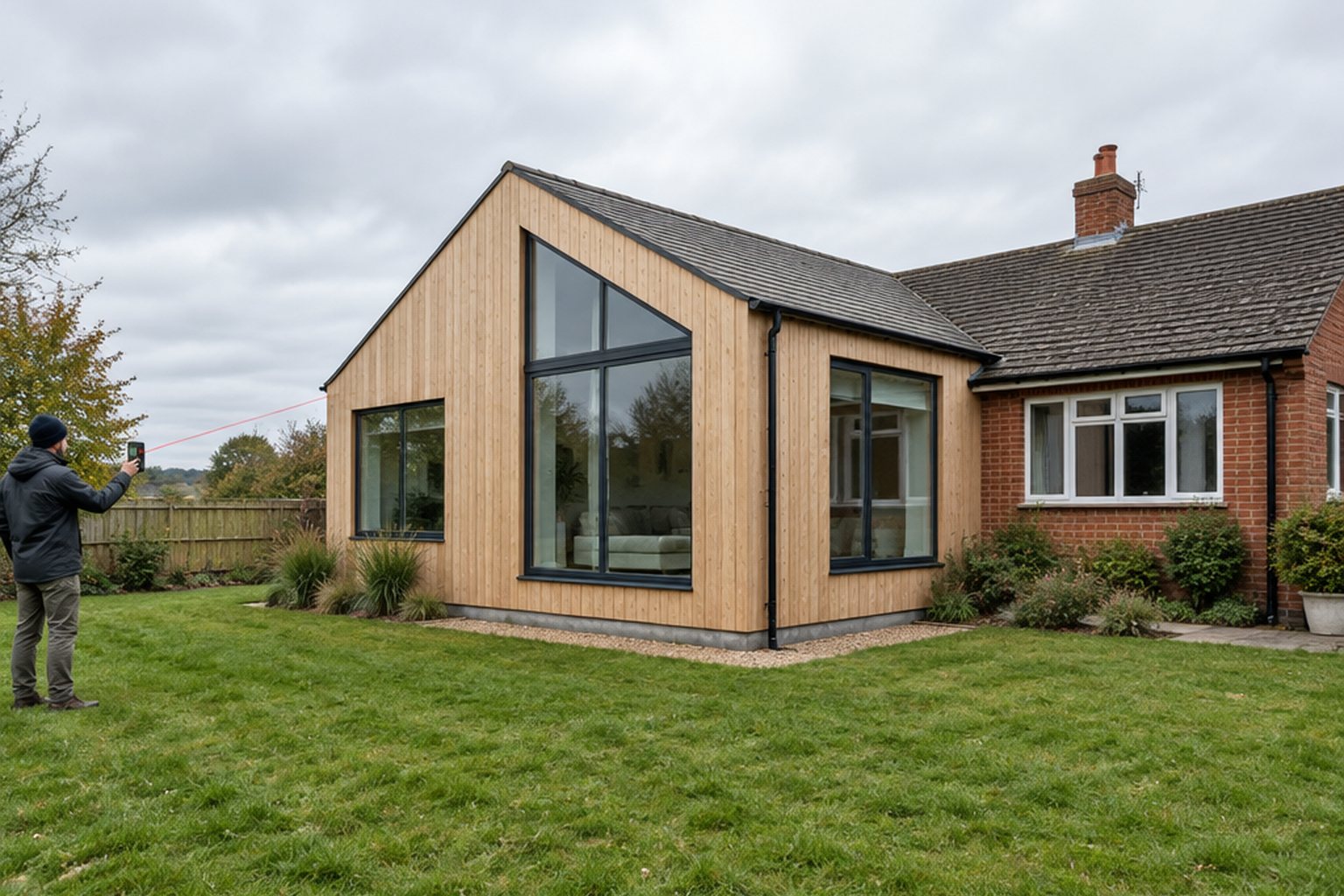
New windows, air sealing, insulation or a remodel can change the relationship between temperature and moisture loads. A replacement chosen from the old system's nameplate may no longer fit the finished building. Ask whether the original calculation and equipment-selection assumptions are available and whether they reflect the present house.
DOE's heat-pump sizing material supports connecting equipment to calculated demand rather than relying on nominal size alone. Its regional examples are not a universal prescription. In a hypothetical efficient home, reduced sensible load may expose a moisture-control weakness that was less noticeable before renovation. That does not mean the efficiency work was inherently wrong; it means the HVAC and ventilation strategy may need to be coordinated with it.
Check how outdoor air enters
Intentional ventilation and uncontrolled leakage both affect moisture loads, but they should be assessed differently. An oversized or poorly configured fresh-air arrangement can add a different burden from leakage through an unfinished chase. Exhaust systems can also change house pressure. Ask the investigator to distinguish these pathways instead of treating all outdoor air as one undifferentiated problem.
PNNL's existing-home ventilation guidance includes humidity assessment when planning outdoor-air delivery. That supports checking ventilation settings and actual operation alongside HVAC behavior. Do not simply shut off a designed ventilation system to obtain a lower humidity reading. If its arrangement is unsuitable, the correction should preserve appropriate indoor-air-quality function while addressing the moisture consequence.
Decide when separate dehumidification makes sense
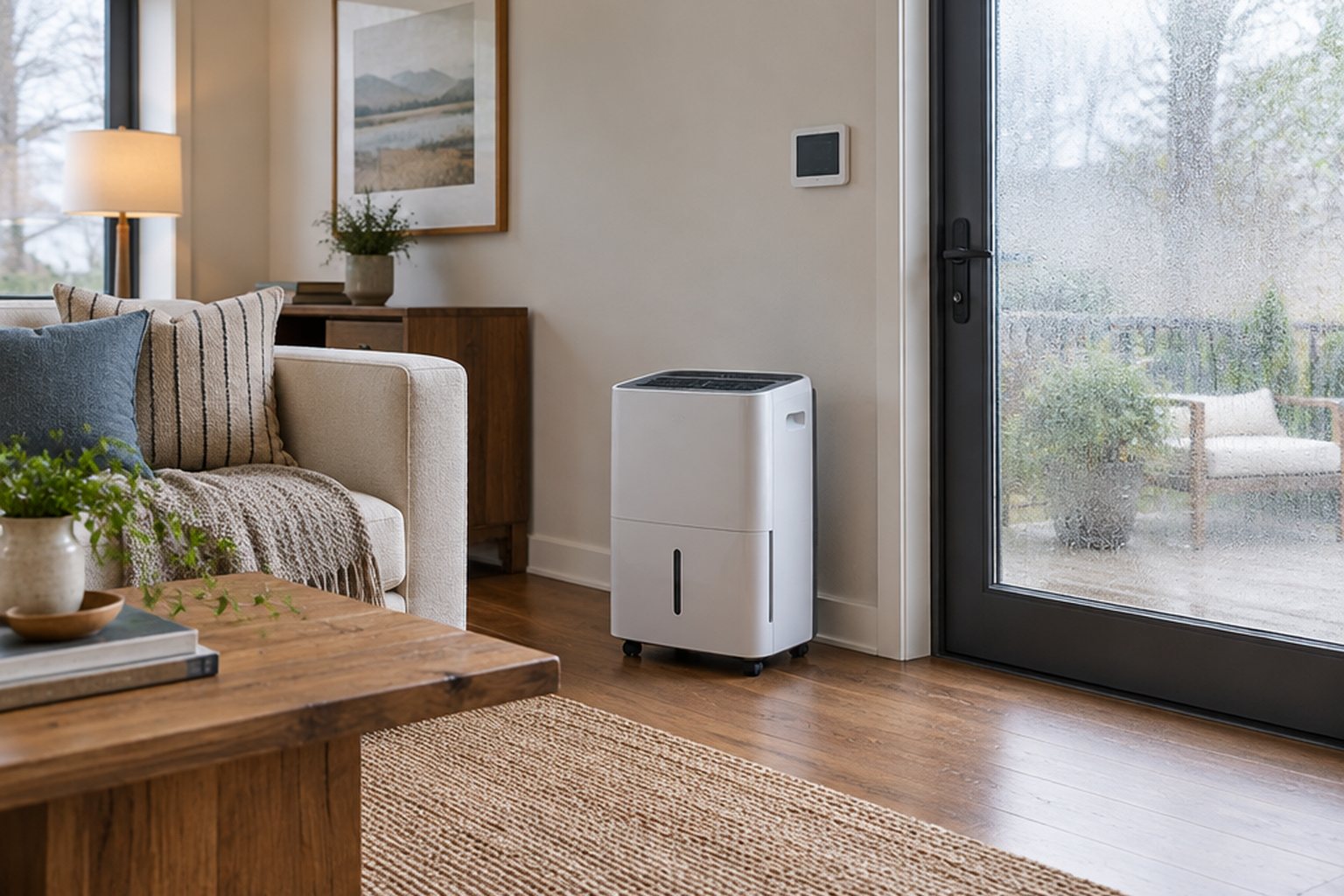
Supplemental dehumidification may be appropriate when the home has a persistent moisture load that the cooling system cannot reasonably manage under all relevant conditions. The decision should follow source and system assessment. Ask where the device will be located, how air will circulate, how water will drain and how controls interact with existing equipment.
Compare maintenance, noise, service access and operating responsibilities, not only the advertised moisture-removal capacity. A portable unit can be useful in some circumstances, but it is not automatically a complete whole-house solution. Likewise, a permanently installed unit should not be sold as a substitute for repairing active water entry. Define the intended result and how its performance will be observed.
Set acceptance criteria for comfort and moisture together
After correction, compare room conditions and equipment behavior under relevant weather and normal occupancy. Retain the original logs so improvement can be evaluated rather than remembered vaguely. Ask the contractor what range or behavior is appropriate for the specific design and what persistence would trigger further assessment. Avoid inventing a universal humidity target for every season and building.
The final record should identify sources addressed, settings established, equipment work performed and remaining limitations. A lower room temperature alone is not proof that the problem has been solved. The desired outcome is acceptable comfort with managed moisture, achieved through a coherent system that the homeowner can operate without constantly alternating between freezing rooms and excessive humidity.
BEFORE YOU PROCEED
Your project checklist
- Log room temperature, humidity, weather and operating settings.
- Investigate active moisture sources and exhaust defects.
- Have runtime, airflow and controls assessed together.
- Review equipment selection after major enclosure changes.
- Check intentional ventilation without disabling it indiscriminately.
- Evaluate follow-up comfort and moisture under relevant conditions.
Questions that come up next
Should I keep lowering the thermostat to remove humidity?
That may overcool the house without addressing the underlying problem. Have the moisture load, controls and equipment behavior assessed so temperature and humidity can be managed together.
Does high humidity prove the AC is oversized?
No. Oversizing is one possibility, but moisture sources, ventilation, airflow, controls and maintenance problems can produce similar symptoms. Diagnosis should use measurements and system-specific assessment.
EVIDENCE & SCOPE
Sources for this guide
Applies to: United States homeowner education. Climate, existing assembly, manufacturer instructions and locally adopted requirements govern project details; no nationwide code threshold is asserted.
Reddit discussions identify questions and experiences, not verified diagnoses or code requirements. Technical claims should be read with the linked primary source, product instructions and local requirements.
- Whole-House Dehumidificationgovernment
Sensible versus latent loads, equipment selection and supplemental dehumidification. Technical guidance; local requirements and product-specific details vary.
- HVAC - Cold Climate Heat Pump Sizinggovernment
Load calculations, capacity selection, balance point and part-load performance. Cold-climate examples are background, not design conditions for every location.
- Whole House Ventilation Strategies for Existing Homesgovernment
Exhaust, supply and balanced ventilation selection; interaction with existing HVAC. Technical guidance; local requirements and product-specific details vary.
- Humidity issuereddit
An anonymized homeowner question that informed the article. Retrieved through search excerpts; anecdotal evidence, not a technical diagnosis.
- Excessive Moisture in Spray Foam Atticreddit
An anonymized homeowner question that informed the article. Retrieved through search excerpts; anecdotal evidence, not a technical diagnosis.