THE SHORT ANSWER
Fog inside a sealed double-pane unit often points to an insulating-glass seal problem, but it does not automatically require replacing the entire window. Confirm the moisture location, identify the product and inspect the frame. Then compare glass-unit, sash and complete-window options, including availability, warranty terms, installation access and any separate damage around the opening.
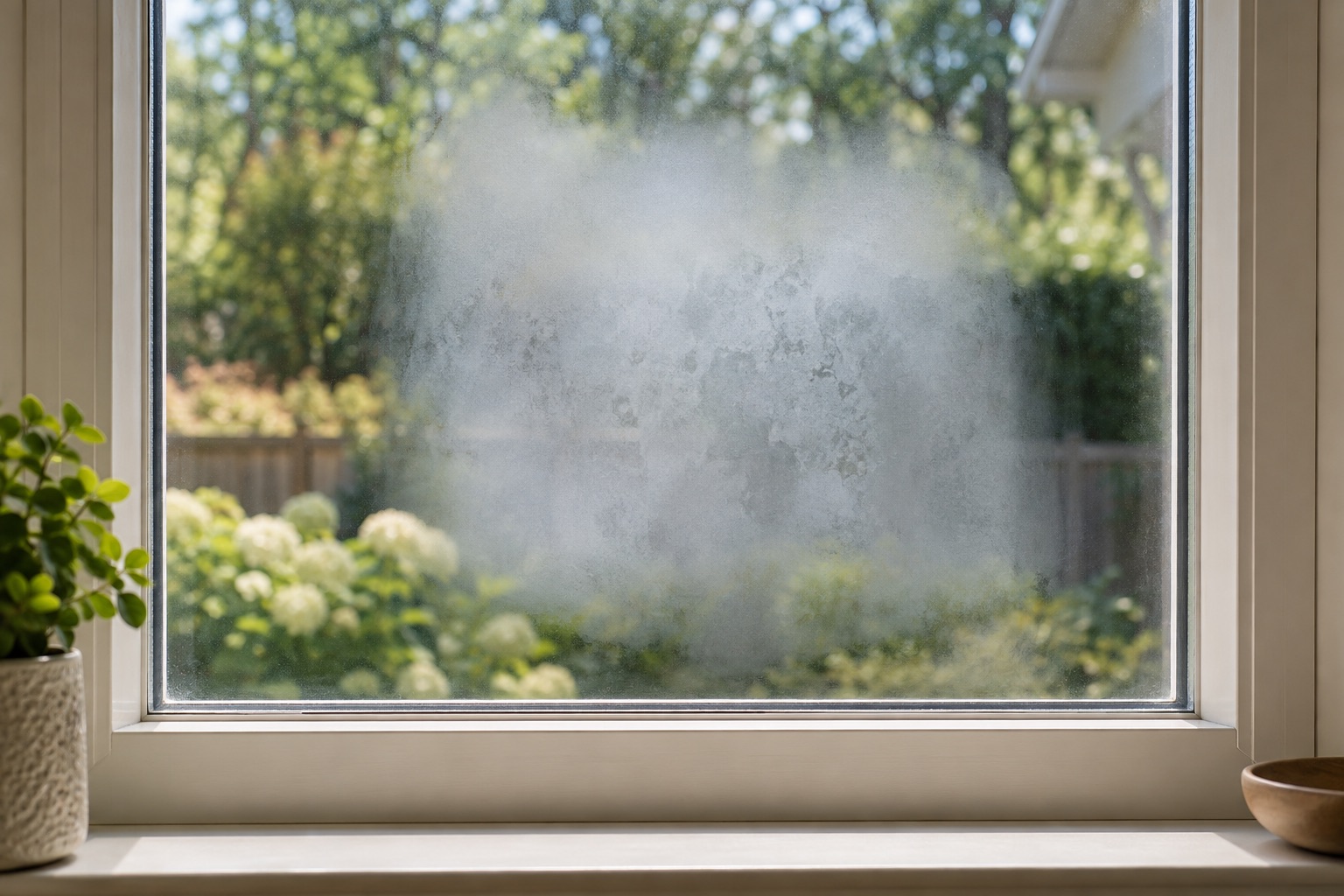
Confirm that the fog is actually between panes
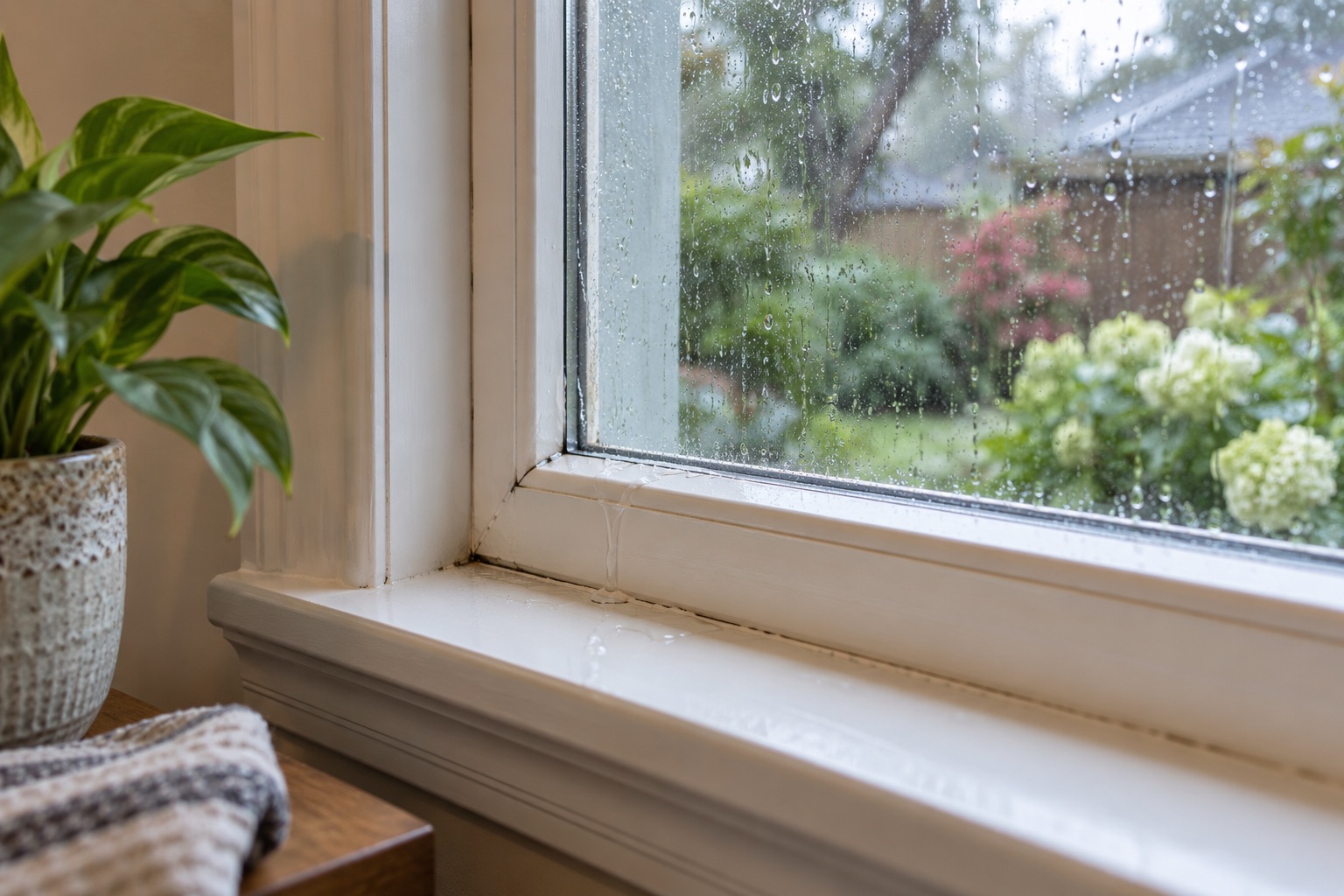
Begin by distinguishing room-side condensation, exterior condensation and haze inside the sealed cavity. Clean accessible surfaces according to the manufacturer, and observe whether the appearance changes. Do not disassemble the unit or remove glazing components to prove the location. A qualified service provider can evaluate ambiguous cases without turning a serviceable window into a more extensive repair.
The Reddit discussion that informed this topic involved uneven condensation on newly installed windows. Comments quickly shifted toward failed seals, illustrating how easy it is to conflate different moisture locations. The first useful question is where the moisture is, not how much a new window costs. Surface condensation may require a room-condition investigation rather than glass replacement.
Understand what the insulating-glass unit contains
A sealed insulating-glass unit is a component within a larger window. Depending on the product, its replacement may be possible separately or as part of a sash assembly. The frame, operating hardware, weather seals and installation joint are other components with their own condition and service options. A failure in one component does not establish failure in all the others.
Andersen's condensation guidance identifies between-pane condensation as different from moisture on the exterior surfaces. Use that distinction to organize a service request. Ask the provider to identify the affected component and the proposed replacement boundary. “Replace the window” can mean very different amounts of work, so obtain a description that names exactly what is being removed and retained.
Identify the existing product before obtaining quotes
Look for accessible product labels, purchase records or prior installation paperwork. Record the window style, approximate installation date and the affected locations. Provide photographs of the whole opening as well as the fogging. Avoid removing parts just to find a hidden label; the service company can advise where identification is normally located for that product.
This information helps establish whether a replacement glass unit or sash is available and whether a warranty route exists. Availability can change with product age and configuration. A similar-looking unit may have a different glass package, dimensions or safety designation. The quote should confirm compatibility rather than assume a generic replacement will preserve all the original product's intended characteristics.
Inspect the frame and surrounding opening
Evaluate operation, visible deterioration, persistent water stains and the condition of the surrounding finishes. A sound frame and otherwise satisfactory window make a component repair worth considering. A deteriorated frame, significant operating problems or a separate rain leak can change that comparison. These findings should be documented rather than inferred solely from the failed glass seal.
Andersen's full-frame replacement explanation describes the broader removal associated with that approach. Such access can be useful where the surrounding opening needs work, but it also adds disruption and restoration. Ask whether the proposed full replacement is solving an additional identified problem or simply reflects the contractor's preferred service. A company that installs new windows may not offer every available glass-service option.
Compare the three repair boundaries
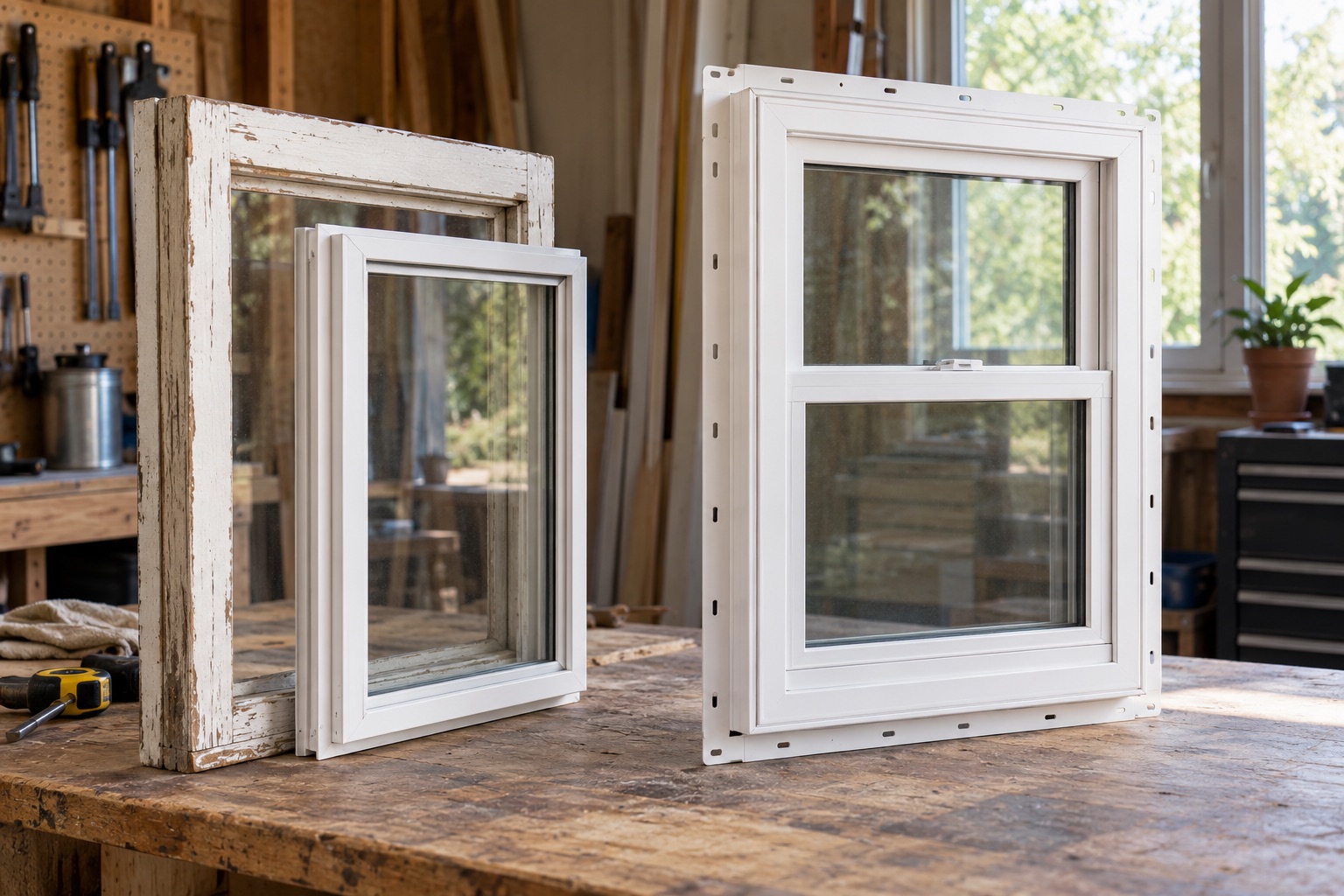
A glass-unit replacement retains more existing material but depends on compatible parts and a frame suitable for reglazing. A sash replacement may package glass and operating components together, where the manufacturer supports it. A complete window replacement changes a broader assembly and may expose the rough opening, depending on the method selected. None is automatically the best choice for every house.
Ask each bidder to state which seals, hardware, trim and finish repairs are included. Include disposal, access and any required protection of adjacent surfaces. If one quote is for a new sash and another for full-frame replacement, comparing the totals without these distinctions is misleading. The decision should balance retained condition, expected serviceability and the actual work needed at the opening.
Review warranties without assuming complete coverage
Warranty eligibility depends on the actual product and terms. Ask who supplies the replacement component, who performs the work, which costs are covered and whether labor or related finish restoration is excluded. Confirm any documentation requirements before authorizing work. Do not assume that a long glass warranty also covers every installation or surrounding-wall condition.
For a hypothetical older window, the glass may qualify for replacement while access labor remains the owner's responsibility. In another case, compatible parts may no longer be available and a broader replacement becomes practical. These are scope questions to resolve with written product information. They are not reasons to accept a sales claim that all failed units are covered or that every old window has no repair option.
Be cautious about cosmetic clearing claims
Ask any service marketed as defogging exactly what it restores. Clearing the visible appearance, restoring a sealed cavity and restoring the original tested thermal performance are different claims. Request product-specific evidence and written limitations rather than assuming that clear glass means the original insulating system has been recreated.
Meanwhile, Andersen's interior-condensation guidance remains relevant when moisture is on the room-side surface. A service aimed at the sealed cavity will not resolve excessive room moisture or cold-surface condensation. Keeping these problems separate avoids paying for a treatment that targets the wrong mechanism. If the provider cannot explain the moisture location or the performance being restored, obtain a more precise assessment before comparing price.
Verify the replacement and retain its identity
At completion, confirm that the specified component was installed, the window operates as intended and the visible surrounding finish has been restored. Ask the installer to demonstrate normal operation and review maintenance instructions. Record any remaining issue separately, especially a rain leak or frame defect that was outside the glass-service scope.
Keep the replacement label or paperwork, invoice and warranty terms with the home's records. Inspect again under the conditions that originally revealed the fogging, while recognizing that surface condensation can still occur normally. A successful component repair should be judged against its stated purpose. It need not turn an older window into a new model, but it should provide the compatible, documented result that the proposal described.
BEFORE YOU PROCEED
Your project checklist
- Confirm the moisture is inside the sealed cavity.
- Identify the product and available glass or sash parts.
- Document frame condition and any separate rain leakage.
- Compare quotes by glass, sash or whole-window scope.
- Clarify warranty coverage for parts, labor and restoration.
- Retain identification and service records for the replacement.
Questions that come up next
Can I replace only the fogged glass?
Sometimes, if a compatible insulating-glass unit is available and the frame is suitable. Other products are serviced through sash replacement. Have the exact window evaluated before assuming full replacement is necessary.
Does defogging restore the original energy performance?
Not necessarily. Ask what the service restores and what evidence supports that claim. A clearer appearance alone does not establish that the original sealed insulating unit or its tested performance has been recreated.
EVIDENCE & SCOPE
Sources for this guide
Applies to: United States homeowner education. Climate, existing assembly, manufacturer instructions and locally adopted requirements govern project details; no nationwide code threshold is asserted.
Reddit discussions identify questions and experiences, not verified diagnoses or code requirements. Technical claims should be read with the linked primary source, product instructions and local requirements.
- Condensation on windows: What causes it and how to manage itmanufacturer
Distinguishes indoor, outdoor and between-pane condensation.
- Full-Frame Window Replacementmanufacturer
Full-frame versus insert scope and retained frame conditions.
- Condensation on the Interior of Window or Patio Door Glassmanufacturer
Interior condensation versus insulating-glass seal failure; humidity and surface temperature.
- New windows installed. some have condensation, some don'treddit
An anonymized homeowner question that informed the article. Retrieved through search excerpts; anecdotal evidence, not a technical diagnosis.
- Interior Condensation on New Windows?reddit
An anonymized homeowner question that informed the article. Retrieved through search excerpts; anecdotal evidence, not a technical diagnosis.