THE SHORT ANSWER
Butcher block near a sink needs a finish and installation plan that accounts for repeated water exposure, cut edges and the underside. Maintenance oil and a curing coating are different approaches and cannot be swapped casually over an existing treatment. Choose a system for the intended use, follow its full preparation and cure instructions, and make leak inspection and maintenance practical.
Decide whether the surface is a counter or a cutting board
Some households want wood for its appearance and use separate cutting boards. Others intend to cut directly on it. Those are different finish and maintenance decisions. Ask whether the selected product supports the intended contact and use after the required cure, and whether cutting would damage its protective film.
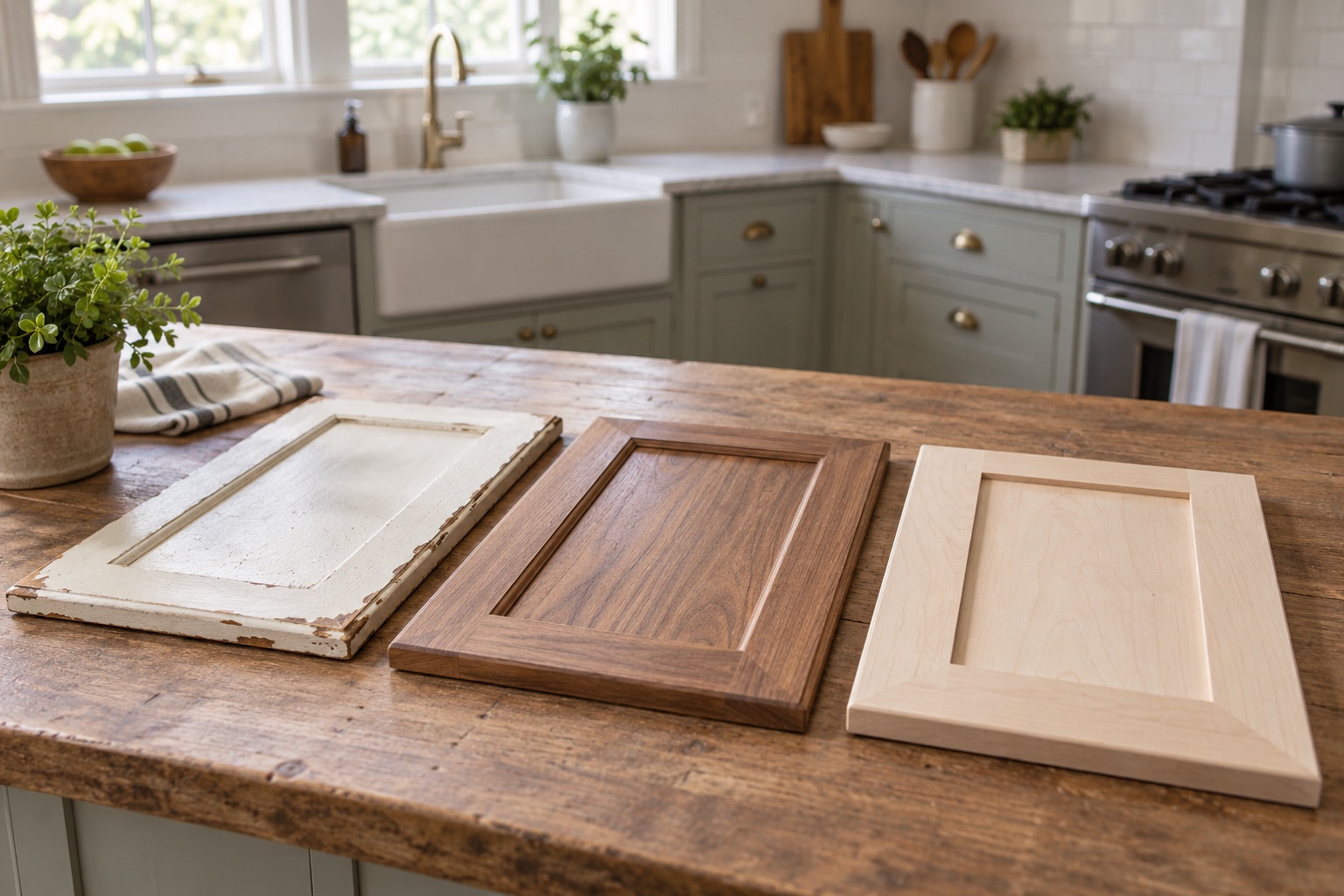
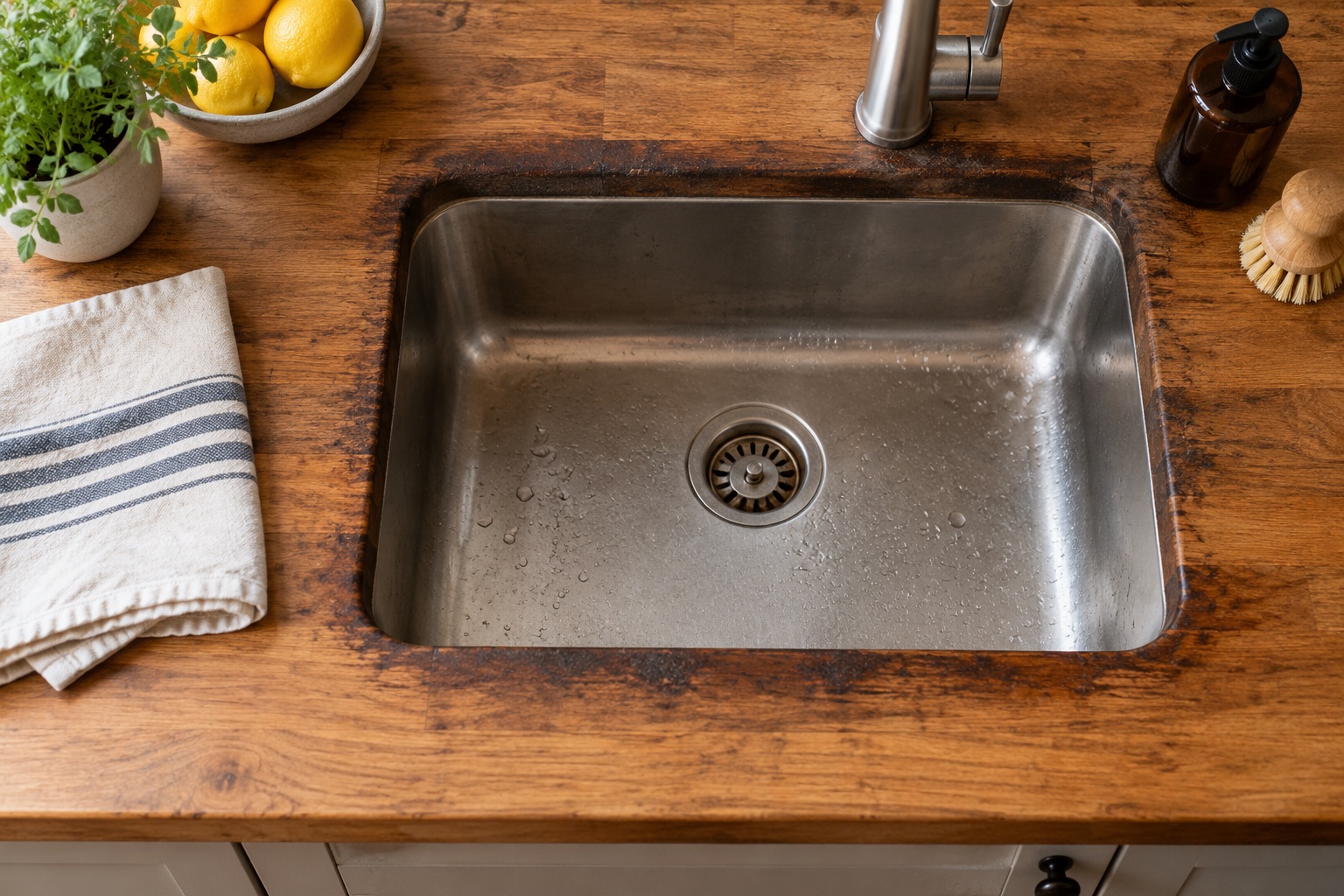
In the butcher-block discussion behind this article, repeated oiling did not prevent staining and water damage, and an attempted switch to a different finish became difficult. The lesson is to choose the maintenance strategy before installation rather than treating every wood oil as interchangeable. Identify the wood product, factory treatment and any previous coating. A finish that works on clean unfinished wood may not bond or cure as intended over another treatment.
Understand oil maintenance versus a curing coating
A maintenance-oil approach and a film-forming or otherwise curing finish do not behave identically. Their application, renewal and damage repair differ. Read the selected product's instructions rather than relying on the general word oil, which can appear on products with very different formulations.
Consider your tolerance for ongoing care and visible wear. A finish that permits straightforward local renewal may require a different routine from one chosen to provide a more continuous protective coating. Neither approach makes standing water or an unresolved sink leak irrelevant. Ask what the manufacturer recommends for counters around sinks and what preparation is needed before applying it. Also clarify what the finished surface should feel and look like, since a rough, tacky or uneven result may indicate an application or cure problem rather than the intended character of wood.
Pay particular attention to cutouts and end grain
Sink and faucet openings expose edges that may see frequent water. These areas need to be included in the finish sequence, not left as raw cuts after the visible top is coated. The Waterlox countertop sequencing guide specifically discusses newly exposed cut edges and finish planning.
Confirm who coats the sink cutout, faucet holes and any field cuts, and when that happens relative to installation. A drop-in sink can conceal unfinished material, while an undermount arrangement can leave wood edges directly exposed during use. The detail must fit the selected sink, finish and countertop. Do not assume a bead of sealant at the visible rim compensates for every untreated surface. Photograph preparation before the sink hides it, and retain the finish instructions for later alterations.
Include the underside and ventilation during cure
The underside is easy to overlook because it is not part of the finished-room photograph. Yet nearby appliances and sink areas can create exposure conditions worth planning for. Waterlox's underside guidance distinguishes locations with substantial moisture exposure and discusses allowing the finishing system to cure appropriately.
Use those instructions for the selected product rather than coating every surface with an arbitrary number of layers. Ask how air access and installation timing affect cure before the counter is enclosed. Coordinate the dishwasher and other appliances so their installation follows the relevant requirements. A countertop that is coated immediately before being sealed into a tight location may not receive the conditions assumed by the finish instructions. The underside plan belongs in the schedule, not in a rushed final step after the top is already installed.
Do not switch finishes without a compatibility plan
If mineral oil or another treatment is already present, identify it before sanding and recoating. Surface appearance alone may not tell you how far a previous product has penetrated. Applying a new coating over an incompatible treatment can leave adhesion or cure problems.
Ask the new finish manufacturer what preparation is appropriate and whether a test area is needed. Do not keep adding products in the hope that one will seal the others in. A small controlled trial can reveal whether the proposed surface preparation produces an acceptable result before the entire counter is affected. Follow label instructions for sanding dust, used rags and waste handling. If the existing treatment is unknown or the wood is damaged around the sink, a professional evaluation may be more economical than repeatedly stripping and refinishing without a clear target.
Design maintenance around ordinary kitchen use
Place a convenient drying cloth near the sink and avoid leaving wet items against the same edge indefinitely. Check the finish at high-exposure areas and follow the manufacturer's renewal guidance. A finish can remain attractive on the open countertop while deteriorating at a faucet base or cutout.
Inspect plumbing and sink connections from below so small leaks are discovered rather than absorbed into hidden material. Do not confuse water from above with a leak underneath; the corrective work differs. For a hypothetical household that routinely leaves wet dishes directly on the wood, an appropriate drying arrangement may improve performance more than simply adding another coat. If that routine is unlikely to change, consider a different material or a coordinated sink-area surface rather than relying on an unrealistic maintenance promise.
Accept the finish after its required cure
The handoff should identify the product, preparation, coats or stages, cure conditions and permitted return to use. Dry-to-touch is not the same as readiness for water, appliances or food-related use. Follow the actual instructions rather than a generic internet waiting period.
Inspect the finished top, edges and accessible underside for consistent treatment and the agreed appearance. Check that sink and faucet details are complete and that installation has not exposed untreated cuts. Keep a small material sample or product record for future repair, and clarify how local damage should be addressed. Butcher block can be a deliberate, maintainable kitchen choice when its limitations fit the household. It is a poor fit when selected as a cheap substitute while its water exposure, finish compatibility and care requirements are left unresolved.
BEFORE YOU PROCEED
Your project checklist
- Define direct cutting versus separate cutting-board use.
- Identify all existing factory or maintenance treatments.
- Select a documented finish system for sink exposure.
- Include cutouts, faucet holes and field cuts in the coating sequence.
- Plan underside exposure and cure access.
- Set a practical routine for drying and leak inspection.
Questions that come up next
Can I apply a film finish over an oiled counter?
Only after the selected manufacturer's compatibility and preparation requirements are resolved; do not assume sanding alone is sufficient.
Does an undermount sink make wood impossible?
Not automatically, but exposed cut edges and the complete finish, seal and maintenance detail need careful planning.
EVIDENCE & SCOPE
Sources for this guide
Applies to: United States general material and workmanship guidance; selected-product instructions and applicable local requirements control.
Reddit discussions identify questions and experiences, not verified diagnoses or code requirements. Technical claims should be read with the linked primary source, product instructions and local requirements.
- Butcher block counter mistake?reddit
Repeated oiling has not prevented staining and water damage; attempt to change finish causes sanding problems. Search excerpt reviewed; the full discussion was not available during research. This is an individual homeowner account.
- Waterlox: Where, When and in What Order to Finish Countertopsmanufacturer
End grain, cutouts and finish sequencing. Indexed manufacturer guidance reviewed; compatibility depends on the existing and proposed finishes.
- Waterlox: Finishing the Underside of a Countertopmanufacturer
Undermount sink exposure, underside finishing and cure access. Guidance for the named finishing system, including sink-area exposure.