THE SHORT ANSWER
A shower flood test should evaluate a defined assembly after the required cure, using the method and duration specified by the system and applicable inspector. Homeowners should ask to see the setup, starting reference, observations and outcome before tile conceals the work. A brief pour toward the drain or an undocumented assurance is not equivalent to a recorded test.
Agree on what is being tested
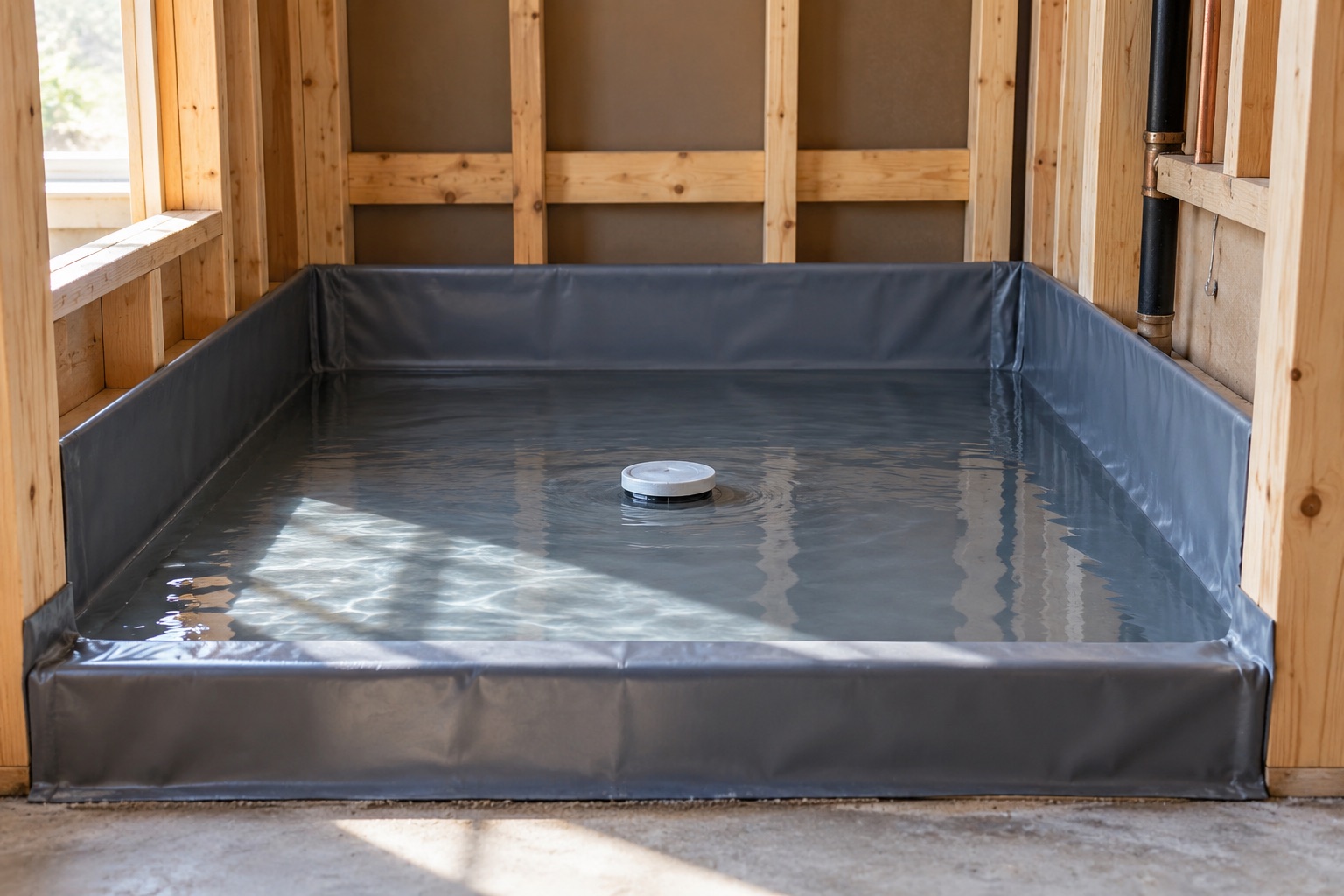
A pan water test is intended to check a particular portion of the shower assembly. It does not automatically test the plumbing supply, every wall penetration or the finished glass enclosure. Ask the installer to identify the test boundary on a drawing or photograph before deciding whether the result answers your concern.
The discussion about a short inspection visit illustrates how an owner can leave with an approval but remain unsure what was checked. A local inspection and a manufacturer's recommended verification may have different scopes. Do not assume they conflict, but clarify both. The useful record says which assembly was tested, under which instructions and with what result. It should also identify work that will occur afterward, such as accessory fastening, that could affect the completed shower.
Check cure and readiness before water is introduced
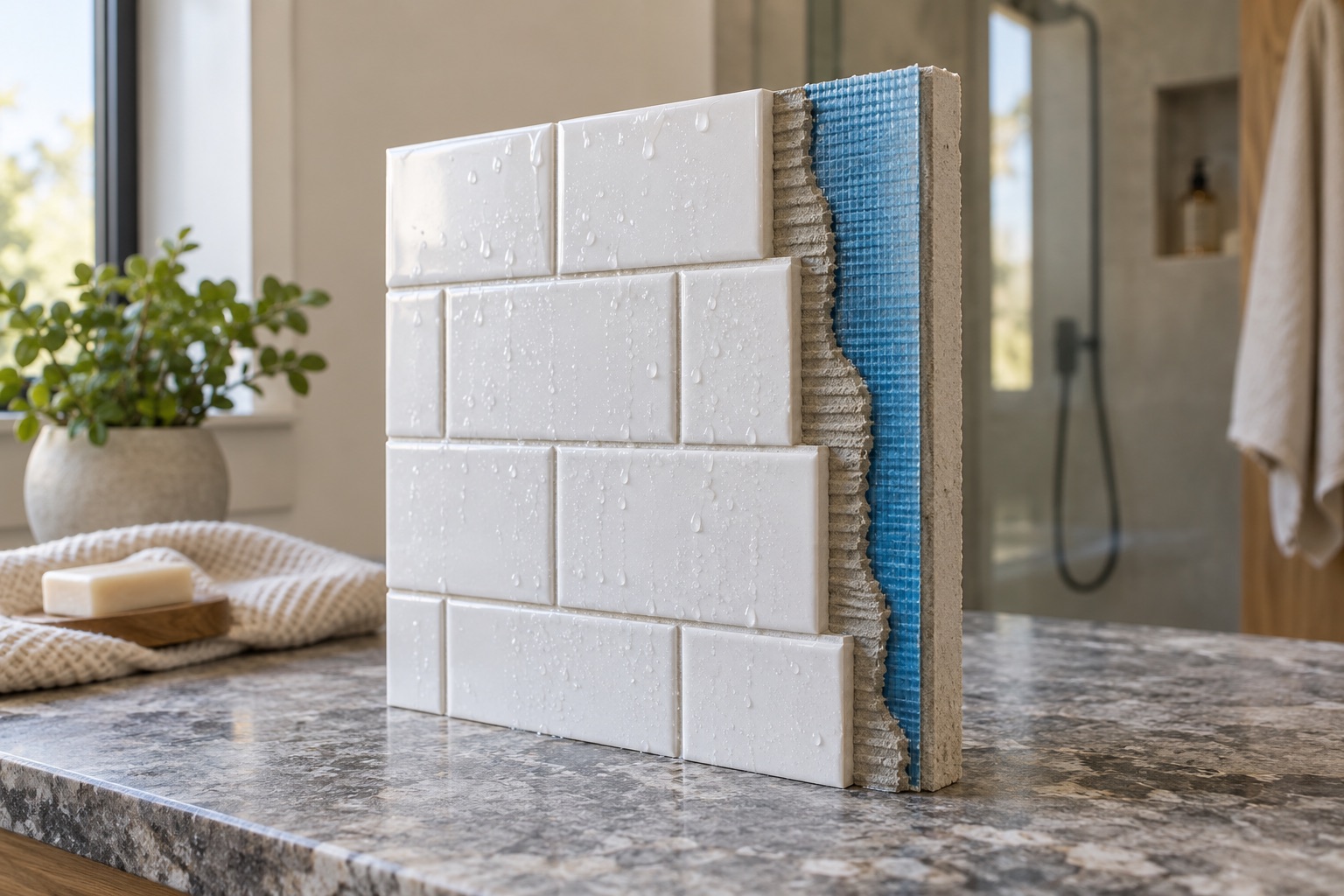
Waterproofing materials, seams, mortars and sealants can have preparation and cure requirements before testing. Those requirements depend on the selected system and conditions. Schluter's KERDI guidance describes a water test as a quality-control step before tile, while the Shower System Handbook supplies the relevant assembly details. Read the instructions for the actual configuration rather than borrowing a waiting period from an online video.
The installer should verify that the substrate and waterproofing stage are complete enough for the proposed test. Note any unfinished corners, transitions or penetrations. A liquid system has its own application and readiness criteria; a sheet system has its own seam and connection details. Introducing water early can make the observation difficult to interpret and may affect materials that were not ready. A scheduled tile delivery is not a reason to ignore that hold point.
Make the setup visible and understandable
The responsible installer should explain how the drain is isolated and which drain connection the test includes. Water held above an incorrectly placed closure can fail to challenge the connection that needs checking. Homeowners need not install the closure themselves, but should be able to understand the documented arrangement.
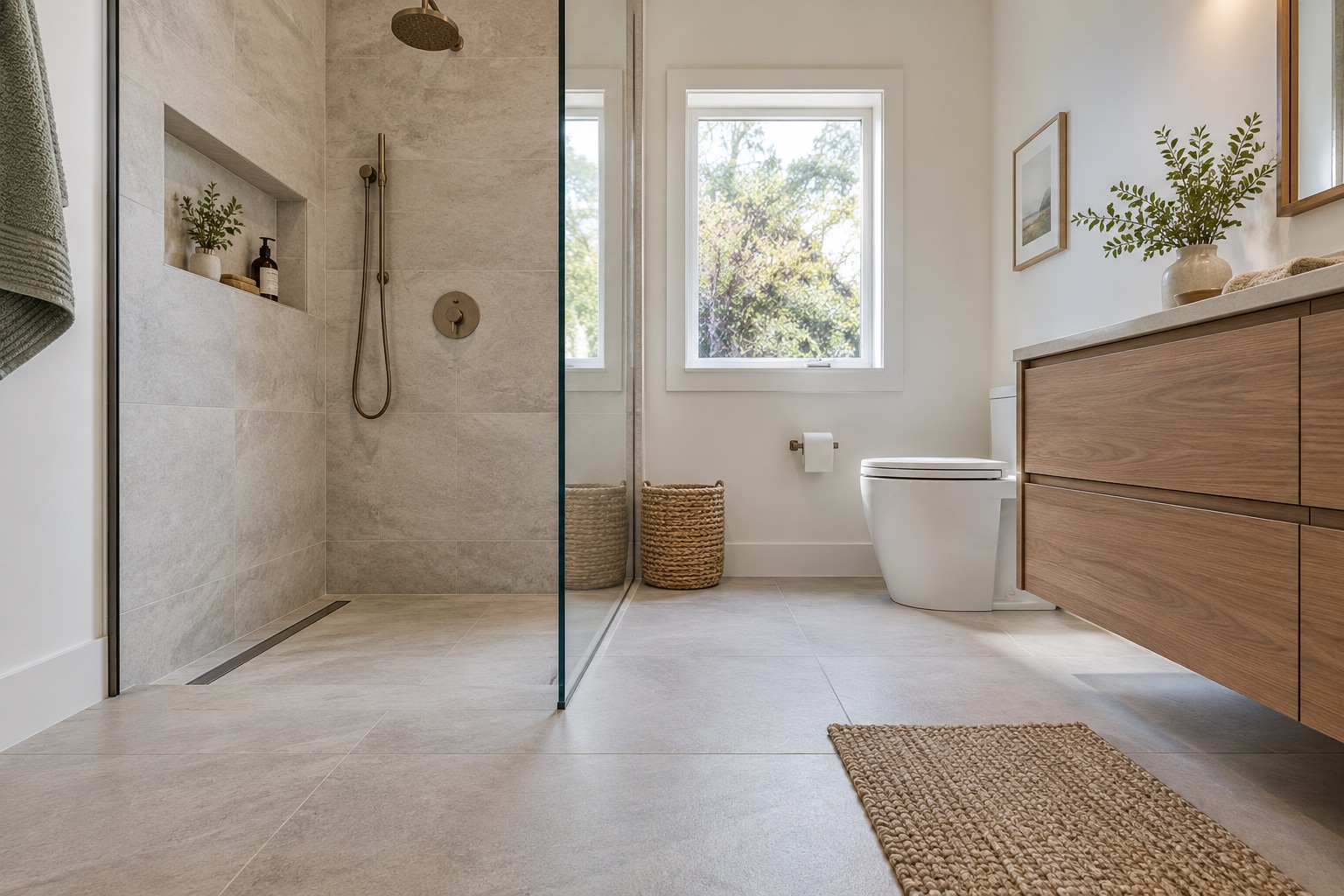
The water level and temporary boundaries must follow the selected test method and applicable requirements. Curbless showers may need a planned temporary dam; attaching or removing it must not damage the waterproofing. Do not improvise a higher water level or unapproved dam to make a test more demanding. Ask how the surrounding building will be protected and who will monitor it. A test that exposes a leak should have a clear response plan rather than leaving water unattended above occupied or finished space.
Record observations that can be compared
Photograph a stable starting reference and record the start time. The method should account for normal environmental effects and make any level change interpretable. A photograph of water in a pan without a reference, timestamp or follow-up says little about the outcome.
Check accessible adjoining and lower areas as directed by the responsible professional, without opening unsafe or unrelated building components. Document visible leakage, dampness or other changes. In the failed-test discussion, water appeared behind a corner soon after filling. That was useful information because it identified a problem while access remained available. Do not continue a known leaking test simply to reach a planned end time. The installer should stop, protect the building, investigate and record the failure before deciding on a repair.
Require an explained repair and retest
A failed test should change the work plan. Ask what failed, what evidence supports that conclusion and which approved detail will restore the assembly. Smearing a different product over the suspect area without confirming compatibility may complicate both the repair and future diagnosis.
Photograph the repair before it is covered. Follow the repaired system's readiness requirements, then repeat the relevant test under a documented method. Do not treat a dry-looking patch or verbal assurance as the same evidence as a successful retest. If the original problem cannot be confidently isolated, the repair may need broader access. That can be frustrating, but tiling over uncertainty transfers the difficulty to a much more expensive stage. The repair record should identify exactly what changed between the failed and successful tests.
Interpret a passed test within its limits
A satisfactory result is meaningful for the conditions and portion of work tested. It is not a lifetime guarantee or evidence that later penetrations cannot cause trouble. Protection during subsequent tile setting, installation of glass and accessory work remains important.
Ask how the tested surface will be protected and who may fasten through it. If later work damages or changes a waterproofing detail, the installer should determine what verification is needed before proceeding. A hypothetical shower that passed its pan test but later receives an unplanned fastener through a critical location has a new condition; the earlier photograph does not resolve it. Keep the sequence visible in the project record so each trade understands which surfaces are part of the water-control assembly.
Create a simple acceptance record
A useful handoff includes the product and assembly identification, instructions used, test date and duration, setup photographs, observations, any repairs and the final result. Record the inspector's involvement separately so nobody assumes that one form covers every manufacturer requirement. Keep names of responsible firms in the project records without publishing private details.
Before tile begins, resolve unanswered questions about the test boundary or observed changes. Do not invent a universal duration or depth for every shower; the chosen system and applicable requirements determine those details. Homeowners can still ask precise questions and require evidence. The goal is a reviewable concealed-work checkpoint that reduces uncertainty while corrections remain accessible, followed by protection of that verified work as the rest of the shower is completed.
BEFORE YOU PROCEED
Your project checklist
- Identify the assembly and exact test boundary.
- Confirm product readiness and required cure.
- Document drain isolation and temporary boundaries.
- Record start/end references, times and observations.
- Require compatible repair and an appropriate retest after failure.
- Keep inspection approval separate from manufacturer verification records.
Questions that come up next
Is a photograph of a full pan enough?
No. It should be supported by setup, timing, reference and outcome records.
Does passing a pan test verify every shower leak path?
No. Wall penetrations, plumbing, enclosure details and later work may require separate checks.
EVIDENCE & SCOPE
Sources for this guide
Applies to: United States general material and workmanship guidance; selected-product instructions and applicable local requirements control.
Reddit discussions identify questions and experiences, not verified diagnoses or code requirements. Technical claims should be read with the linked primary source, product instructions and local requirements.
- Schluter KERDI Waterproofing Membranemanufacturer
Continuous membrane, system connections and water-test purpose. Manufacturer guidance for the KERDI waterproofing system and its connections.
- Failed my Flood Test and Need Advicereddit
A new membrane shower leaks at a corner during its initial water test despite following videos. Full thread text reviewed. This is an individual homeowner account.
- Should I do a second flood test for longer?reddit
A short inspector visit leaves homeowner unsure whether the assembly was adequately water-tested. Search excerpt reviewed; the full discussion was not available during research. This is an individual homeowner account.
- Schluter Shower System Installation Handbookmanufacturer
Shower assemblies, curbless details, niches, benches and testing. Indexed manufacturer handbook reviewed; assembly and testing details depend on the selected system.