THE SHORT ANSWER
Plan dust control before demolition or sanding begins. A useful approach combines reducing dust at the task, separating the work area, controlling travel routes and cleaning before occupants return. Ordinary renovation containment is not a substitute for lead or asbestos procedures. The plan should name the work, materials, equipment and person responsible rather than promising that a plastic doorway alone will keep the house clean.
Define the dusty work and the occupied areas
List the tasks that will generate dust: removing tile, cutting materials, sanding compound or opening walls. Identify where each task will happen and which rooms must remain occupied. A kitchen connected to a living area presents different containment challenges from a room with a separate exterior entrance.
The family discussion behind this article asked whether countertop and backsplash work could be isolated from spaces used by young children. Another demolition account described dust spreading into bedrooms. Those concerns should be addressed in the scope before work starts. Mark the work zone, storage, waste route and household route on a simple plan. A promise to clean afterward does not answer how dust will be prevented from reaching furniture, bedding or occupied rooms during the work.
Identify hazards before choosing ordinary controls
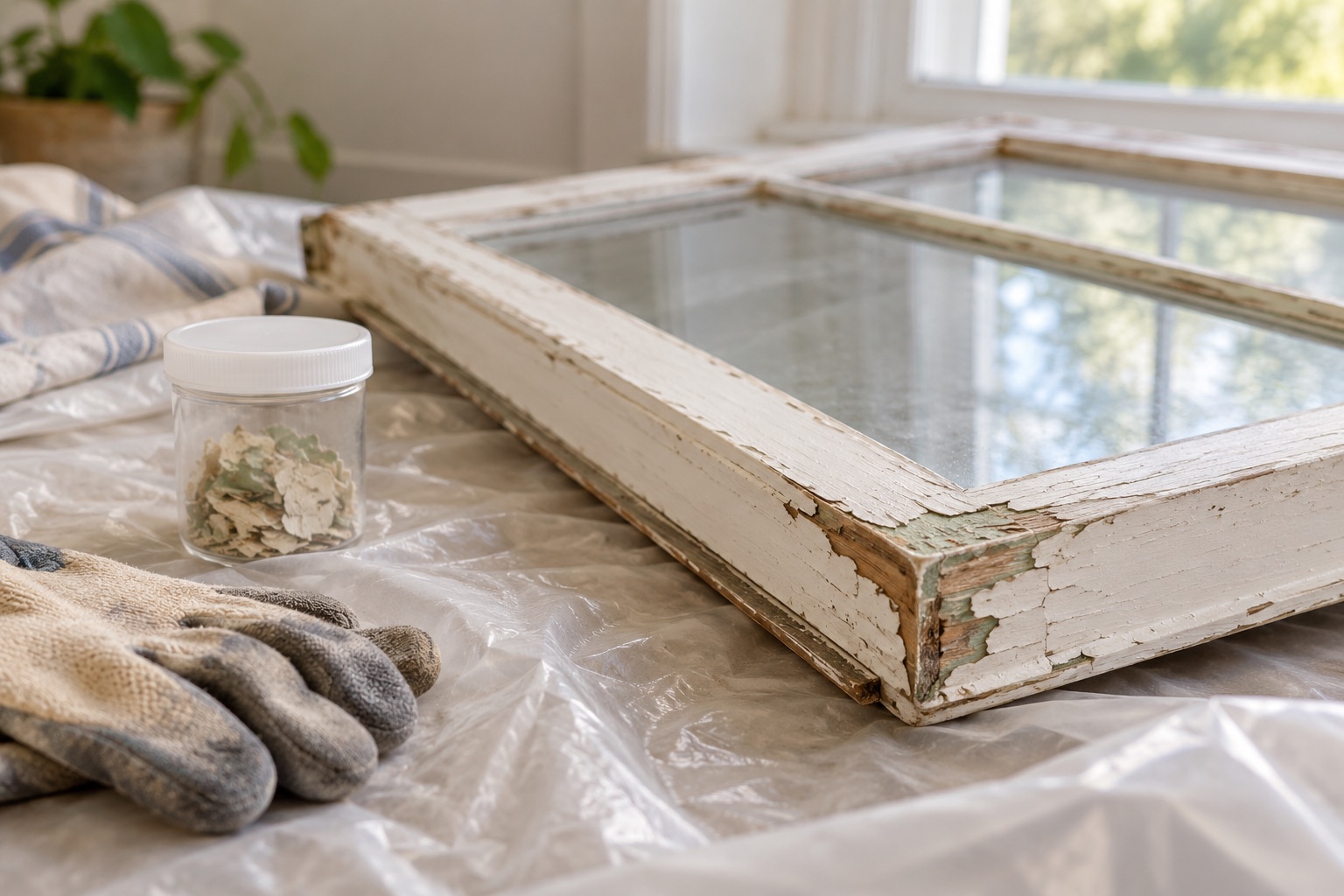
Dust from different materials does not present the same problem. Older coatings or building products may require assessment before disturbance, and cutting mineral materials can require task-specific exposure controls. Do not allow an unidentified layer to be aggressively sanded or demolished because the room has been covered with plastic.
EPA's remodeling guidance separates general indoor-air practices from hazardous-material concerns. Its ordinary ventilation approach is explicitly not a substitute for lead-paint procedures. Establish who identifies suspect materials and what findings stop work. If specialized controls are needed, those requirements should drive the plan. A household vacuum, basic face covering or clean-looking room cannot be treated as proof that a hazardous-material job was appropriately contained and completed.
Reduce dust where it is created
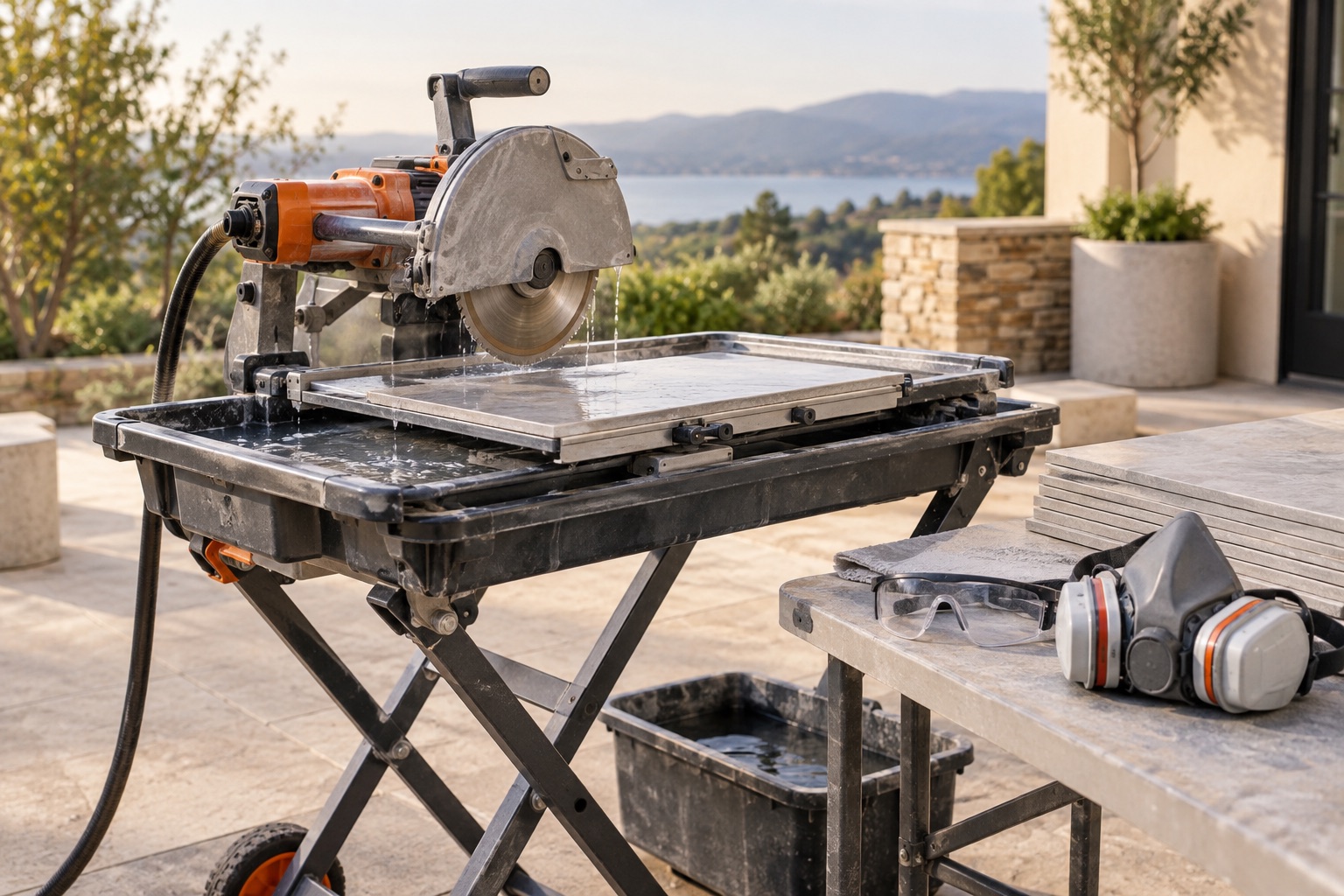
Moving suitable cutting or preparation tasks to a properly arranged location can reduce what must be managed inside, but it should not transfer dust onto neighbors or other occupied areas. Select methods and equipment for the actual material and task. Where extraction is specified, the tool, hose, vacuum and filter must function as a compatible system.
USG's gypsum finishing guidance includes dust-control considerations for sanding. That supports asking about source capture rather than relying solely on a room barrier. Check that collection equipment is maintained and used consistently, including during small touch-ups. A crew can undermine a careful setup by making one uncontrolled cut in the hallway. The scope should explain where each dusty task is permitted and what happens when the work changes unexpectedly.
Separate the work zone and manage access
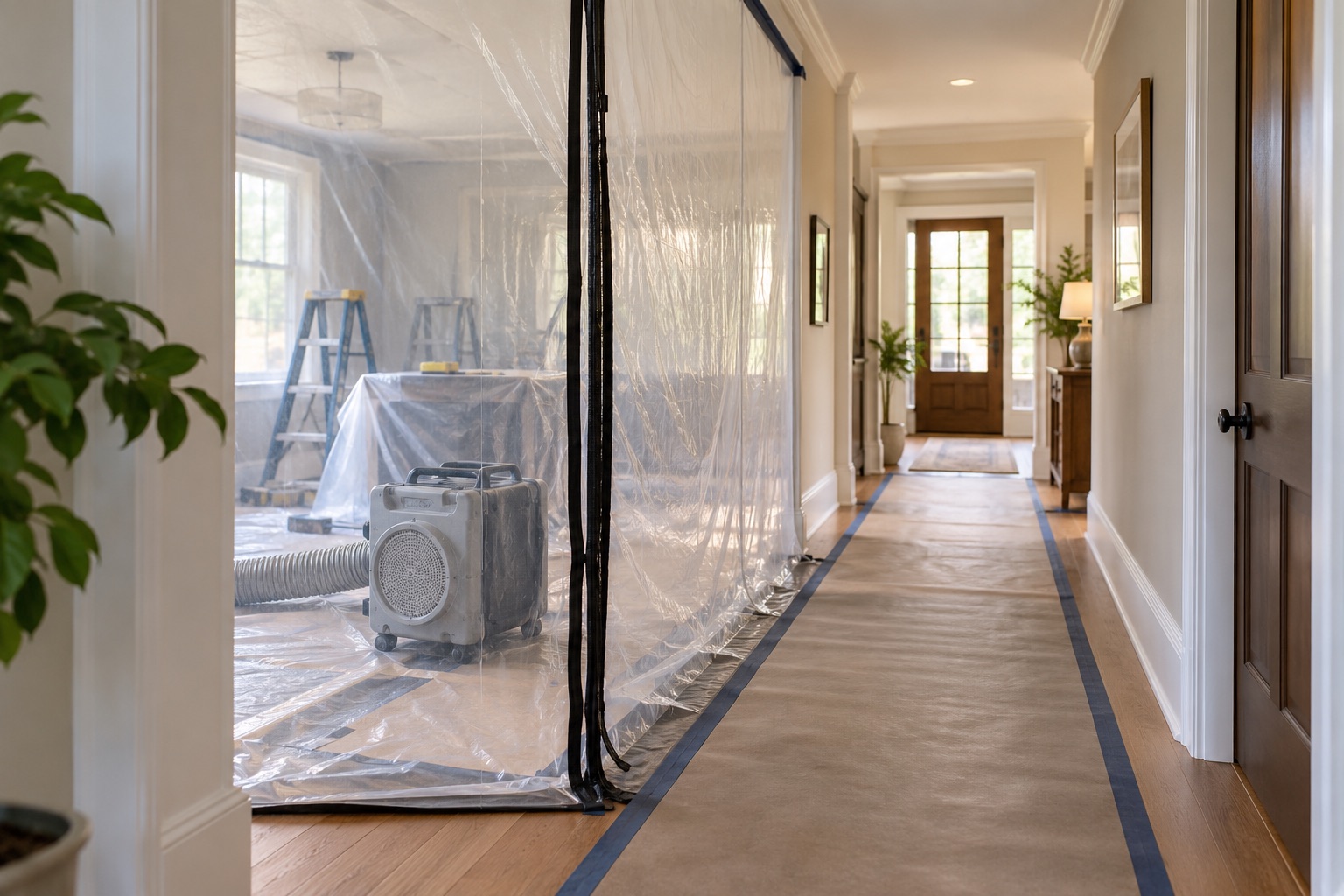
Physical barriers need to cover relevant openings and remain intact as workers move materials. Decide how people enter, how tools leave and where debris is bagged or contained. Repeatedly opening the same doorway between the work zone and occupied space can defeat an otherwise careful arrangement.
Protect travel routes and remove or cover belongings before work begins. Keep children and pets outside the work area and away from stored tools and debris. Discuss the treatment of air-system openings with the responsible trade so dust is not simply distributed elsewhere. Do not block systems or create pressure conditions without understanding the building. Where exhaust or negative-pressure equipment is proposed, account for make-up air and combustion safety through an appropriate assessment. The correct arrangement depends on the tasks and building, not a generic fan placement.
Set daily housekeeping expectations
Agree on when debris is removed, how tools and footwear are managed, and which routes are cleaned before the crew leaves. Daily housekeeping reduces the chance that accumulated material is carried into the rest of the home. It should be part of the work, with clear responsibility.
Avoid dry sweeping or blowing dust around as a substitute for the selected collection and cleaning method. Follow the requirements for the material and equipment involved. Keep waste containers and stored materials out of household paths. For a hypothetical occupied bathroom remodel, the crew's route to an exterior exit may cross a hall used every evening. That route needs its own protection and cleanup plan; containing the bathroom doorway does not address material tracked out on shoes or equipment.
Inspect containment while it is still useful
Check the setup before the first dusty task, then review it when the work changes. Look for torn barriers, open routes and obvious dust outside the intended zone. Document a failure promptly so the crew can stop and correct the source rather than continuing until cleanup day.
Visible dust is useful evidence that controls need attention, but the absence of a visible cloud does not prove that every exposure concern is resolved. Specialized work may require verification beyond ordinary observation. Ask the contractor to explain the acceptance method appropriate to the material. Do not invent a household pass/fail standard based on wiping one windowsill. The review should connect the actual task and hazard to the selected controls and the evidence needed before occupants return.
Plan final cleaning and reoccupation
The completion scope should identify surfaces, furnishings and routes that need cleaning, plus any material-specific verification. Remove temporary protections in a way that does not spread collected dust back through the room. Confirm that equipment, filters and waste are handled according to the work plan.
Inspect the finished area and adjoining spaces included in the agreement. Keep records of any specialized assessment or cleanup, and resolve obvious contamination before returning stored items. A freshly painted surface or pleasant odor is not a substitute for cleaning evidence. For future projects, retain the containment layout and note what worked or failed. The aim is a practical occupied-home plan that manages dust throughout the job, with stronger procedures whenever the materials require them, rather than a vague promise that remodeling is inevitably messy.
BEFORE YOU PROCEED
Your project checklist
- List dusty tasks and identify materials before disturbance.
- Map work, household and waste routes.
- Specify compatible source-capture equipment.
- Review barriers and air-system coordination before work starts.
- Assign daily route and equipment cleanup.
- Define final cleaning and any required material-specific verification.
Questions that come up next
Will plastic across the doorway be enough?
Not by itself. Source capture, access, air pathways and cleaning also need to be planned for the task.
Can ordinary dust control handle lead paint?
No. Lead disturbance requires the appropriate lead-safe procedures and project-specific requirements.
EVIDENCE & SCOPE
Sources for this guide
Applies to: United States general material and workmanship guidance; selected-product instructions and applicable local requirements control.
Reddit discussions identify questions and experiences, not verified diagnoses or code requirements. Technical claims should be read with the linked primary source, product instructions and local requirements.
- EPA: Indoor Air Quality Best Practices During Remodelinggovernment
Dust isolation, occupants, ventilation, cleanup and backdrafting limitations. General US indoor-air guidance; its ordinary ventilation approach does not cover lead-paint disturbance.
- Possible to contain debris/dust from Countertop and backsplash replacement?reddit
Family with small children wants to understand whether kitchen work can be isolated from living space. Search excerpt reviewed; the full discussion was not available during research. This is an individual homeowner account.
- Hired contractor to remodel kitchen - subcontractor to demo kitchen left a huge mess.reddit
Tile and countertop demolition leaves dust across bedrooms and living spaces without effective containment. Search excerpt reviewed; the full discussion was not available during research. This is an individual homeowner account.
- USG: Finishing and Decorating Gypsum Panelsmanufacturer
Finish levels, sanding, surface preparation and HEPA dust extraction. Indexed manufacturer technical guidance reviewed for gypsum finishing and decorating.