THE SHORT ANSWER
A high moisture-meter reading is a reason to investigate, not a diagnosis of water damage or mold. The meaning depends on the instrument, material setting, sensing depth and nearby materials. Confirm the correct mode, compare similar known-dry areas, repeat observations consistently, and use other evidence before deciding whether a wall needs to be opened or repaired.
Identify what the displayed number means
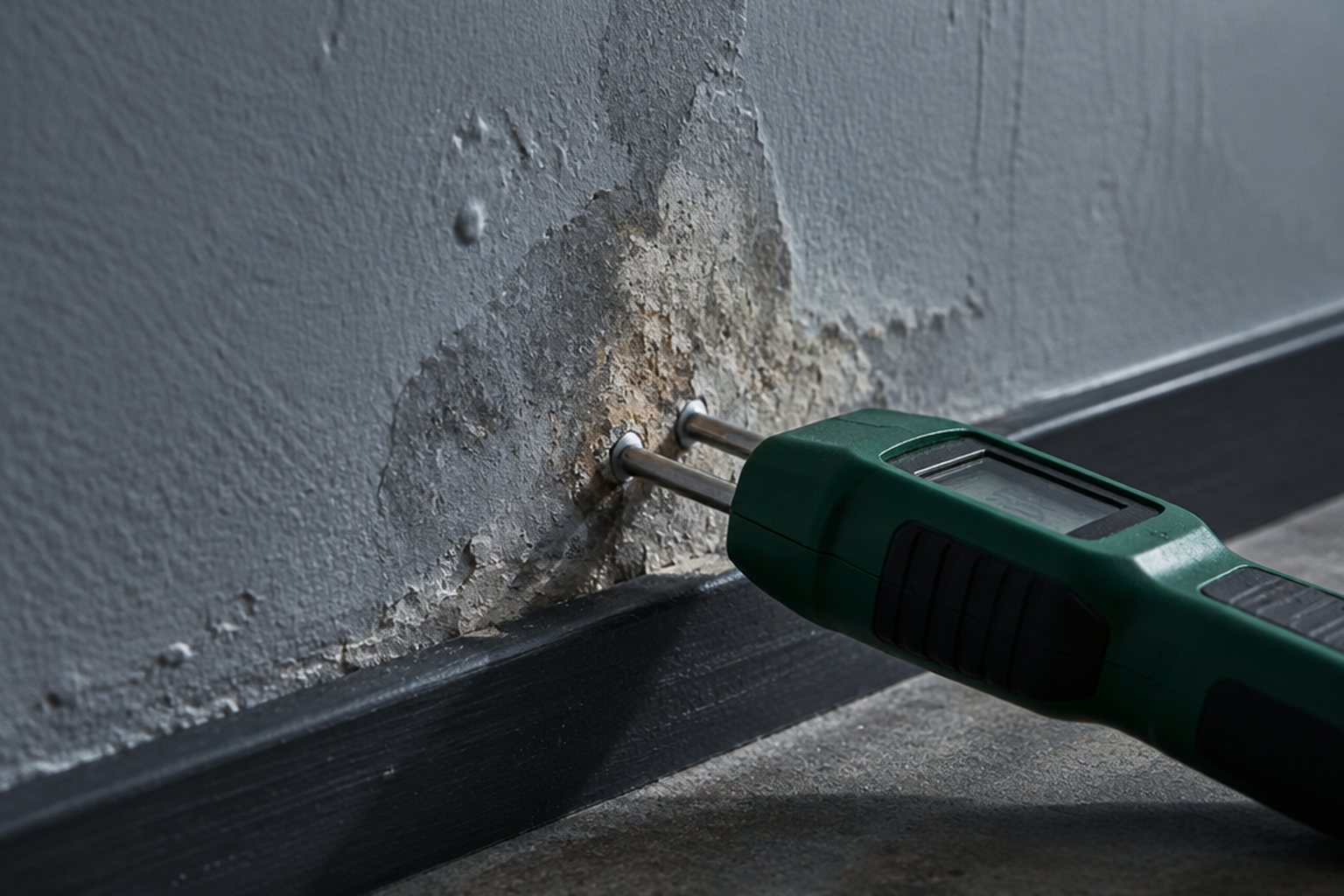
Start with the exact meter model and its manual. Some measurements are expressed as calibrated moisture content for particular materials; others are relative scales useful for comparison. A display that resembles a percentage does not necessarily report the percentage of water in drywall. Misreading that distinction can turn an ordinary comparative observation into an unsupported emergency conclusion.
The Klein ET140 instruction manual provides a concrete example: its drywall and masonry readings use a relative scale, while wood modes have different specifications. Other instruments differ. Record the model and mode whenever you save a result. Without that information, a statement such as the wall reads thirty cannot be reliably interpreted by the next person reviewing the problem.
Match the setting to the actual surface
Confirm whether the sensor is on drywall, masonry, wood or a layered finish. Paint, coverings and underlying materials can complicate interpretation. If you do not know what is behind the surface, state that uncertainty. Do not apply a wood-mode threshold to a wall merely because a framing member may be located behind it.
The researched owner used a pinless meter on exterior walls and then tried to interpret images from inside the cavity. That sequence illustrates how quickly one ambiguous reading can expand into a claim about mold. A better record begins with material identification and meter limits, then asks what additional evidence is needed. More tools do not automatically resolve uncertainty if each result is interpreted beyond its intended use.
Understand depth and nearby-material effects
Pinless instruments sense through a limited region, and their response depends on the device and materials within that region. Metal, layered construction and changes in density can influence readings. The location of fasteners, corner reinforcement, wiring or other concealed components may therefore matter. Consult the manual rather than assuming every peak marks wet material.
Do not drive probes into an unknown wall to settle the question without considering concealed services and finish damage. Intrusive measurements require suitable equipment and competent planning. The useful question is whether the instrument is appropriate for the material and depth being assessed. A device cannot certify conditions throughout an entire wall simply because its display responds strongly at the surface.
Build a comparison that is actually comparable
Choose a reference area with similar construction that has a credible reason to be dry. Compare the same material, instrument mode and technique. A painted masonry wall is not a suitable direct baseline for a paper-faced partition just because both are in the same room. Record enough location detail to repeat the reading later.
Map a small group of readings around the suspect area rather than collecting one isolated maximum. Note whether high values form a regular construction pattern or an irregular area associated with staining or an observed event. These patterns are clues, not proof. A qualified investigator should explain how the readings support or fail to support the suspected water pathway.
Combine readings with the history
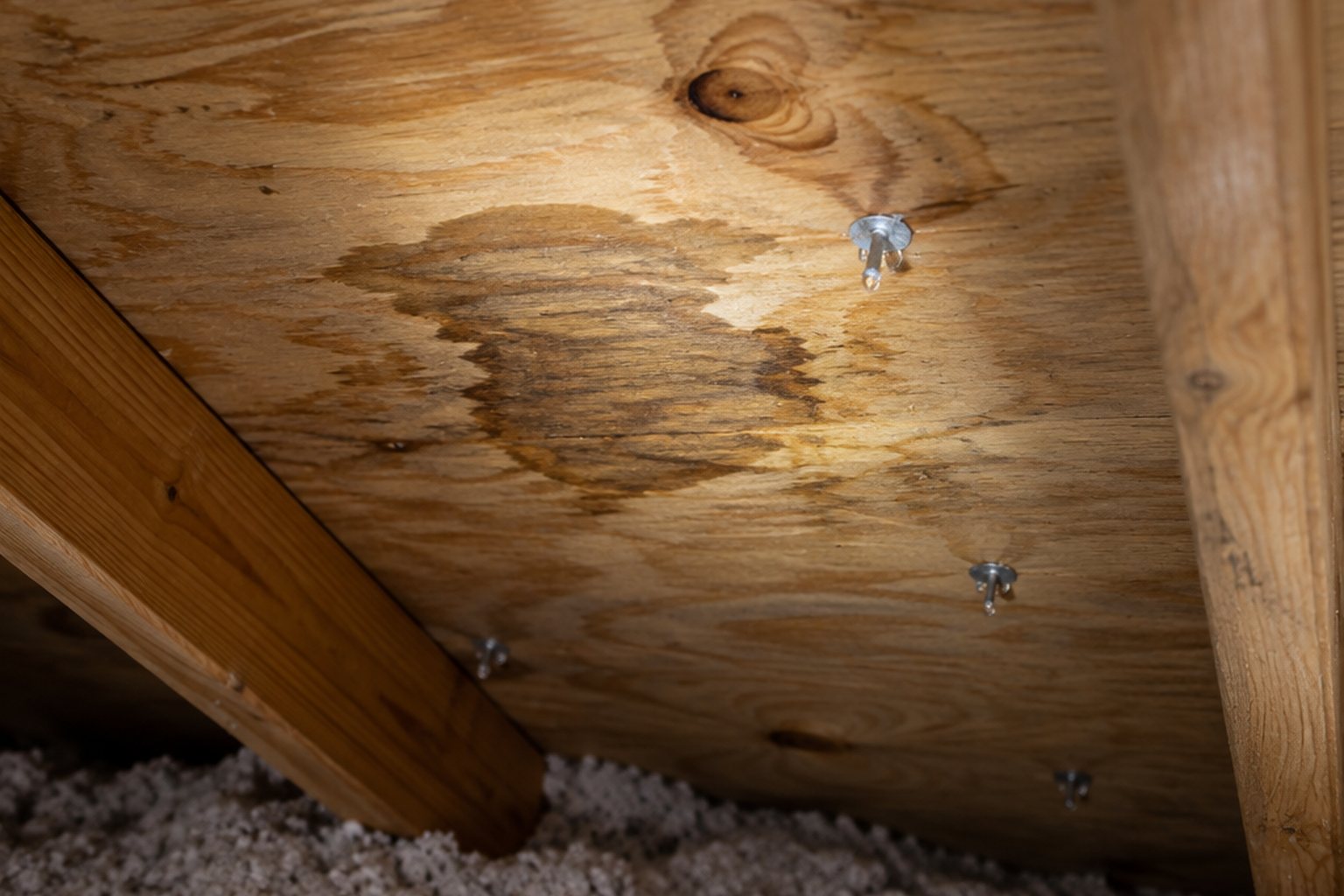
Ask when the symptom began and whether it follows rain, plumbing use, cooling or a seasonal change. Photograph staining, finish changes and accessible water. A reading that rises after a documented leak has a different context from a stable high reading over a metal corner. The history can help prioritize investigation even when the instrument alone cannot identify the cause.
FLIR's moisture-imaging discussion similarly treats imaging as a guide to further measurement rather than direct proof of hidden water. Combining tools is useful when each addresses a defined question. It is less useful when one ambiguous result is used to validate another without independent evidence. Require a clear distinction between suspected moisture, confirmed wet material and an established source.
Keep mold claims separate
A moisture meter measures or infers moisture-related properties; it does not identify mold species or determine health risk. High readings may justify examining a moisture problem, while low readings do not prove that past growth or damage never occurred. Avoid labeling every dark mark seen through a small opening as mold based on the meter alone.
EPA's mold and moisture guide emphasizes addressing moisture conditions and affected materials. It provides a more appropriate framework than a single numerical cutoff. If growth, substantial hidden damage or exposure concerns are present, obtain qualified assistance suited to those conditions. A remodeling decision should not depend on an unsupported diagnosis made from one instrument display and an unclear cavity photograph.
Define when opening the assembly is justified
Selective access may be appropriate when the source remains uncertain, material condition cannot be established or a repair already requires exposure. Ask what question the opening will answer and how its location was selected. Define protection, utility precautions, restoration and the plan for evaluating unexpected conditions before work starts.
For a hypothetical wall, repeated high readings aligned with known metal reinforcement may not support opening it solely for moisture investigation. A different wall with fresh staining after rain and corroborated wet material may justify access promptly. The displayed number could be similar in both cases. The decision comes from the combined evidence and consequences, not from treating the meter as an automatic demolition trigger.
Use drying records with an appropriate criterion
After a verified wetting event, measurements can help track change when the instrument and method remain consistent. Record the locations, dates, settings and relevant conditions. Ask the responsible professional what criterion fits the material and reconstruction requirements. There is no universal drywall number that every meter must reach before any wall can be closed.
Retain the final readings with the source-repair documentation. Drying alone is not source correction, and a repaired source does not mean every material has already dried. A good handover separates these milestones and states any inaccessible areas. This lets the homeowner understand what the measurements established without giving the instrument more authority than its design supports.
BEFORE YOU PROCEED
Your project checklist
- Record the meter model and whether its scale is relative or material-calibrated.
- Use the correct setting for the actual surface.
- Consider depth, layering and concealed metal before interpreting peaks.
- Compare repeatable readings with similar credible dry references.
- Combine measurements with weather, fixture use and visible evidence.
- Document material-specific drying criteria and unresolved limitations.
Questions that come up next
What moisture reading is normal for drywall?
There is no universal number across meters. Some drywall modes are relative scales. Use the specific manual and a suitable comparison method, with qualified interpretation when repair decisions depend on the result.
Can a moisture meter tell me whether a wall has mold?
No. It can inform moisture investigation but does not identify mold or assess health risk. Growth and material condition require separate evaluation within the building's moisture history.
EVIDENCE & SCOPE
Sources for this guide
Applies to: United States homeowner education. Climate, existing assembly, manufacturer instructions and locally adopted requirements govern project details; no nationwide code threshold is asserted.
Reddit discussions identify questions and experiences, not verified diagnoses or code requirements. Technical claims should be read with the linked primary source, product instructions and local requirements.
- ET140 Pinless Moisture Meter Instruction Manualmanufacturer
Material modes, measurement depth and relative drywall/masonry scale.
- How To Detect a Water Leak with Thermal Imagingmanufacturer
Thermal temperature patterns and verification with moisture measurements.
- A Brief Guide to Mold, Moisture and Your Homegovernment
Moisture-source correction, porous materials, professional cleanup decisions and completion criteria.
- High readings on exterior walls with pinless moisture meter. Scoped it but unsure what I’m looking at. Is this mold?reddit
An anonymized homeowner question that informed the article. Retrieved through search excerpts; anecdotal evidence, not a technical diagnosis.
- Using FLIR for leak finding?reddit
An anonymized homeowner question that informed the article. Retrieved through search excerpts; anecdotal evidence, not a technical diagnosis.