
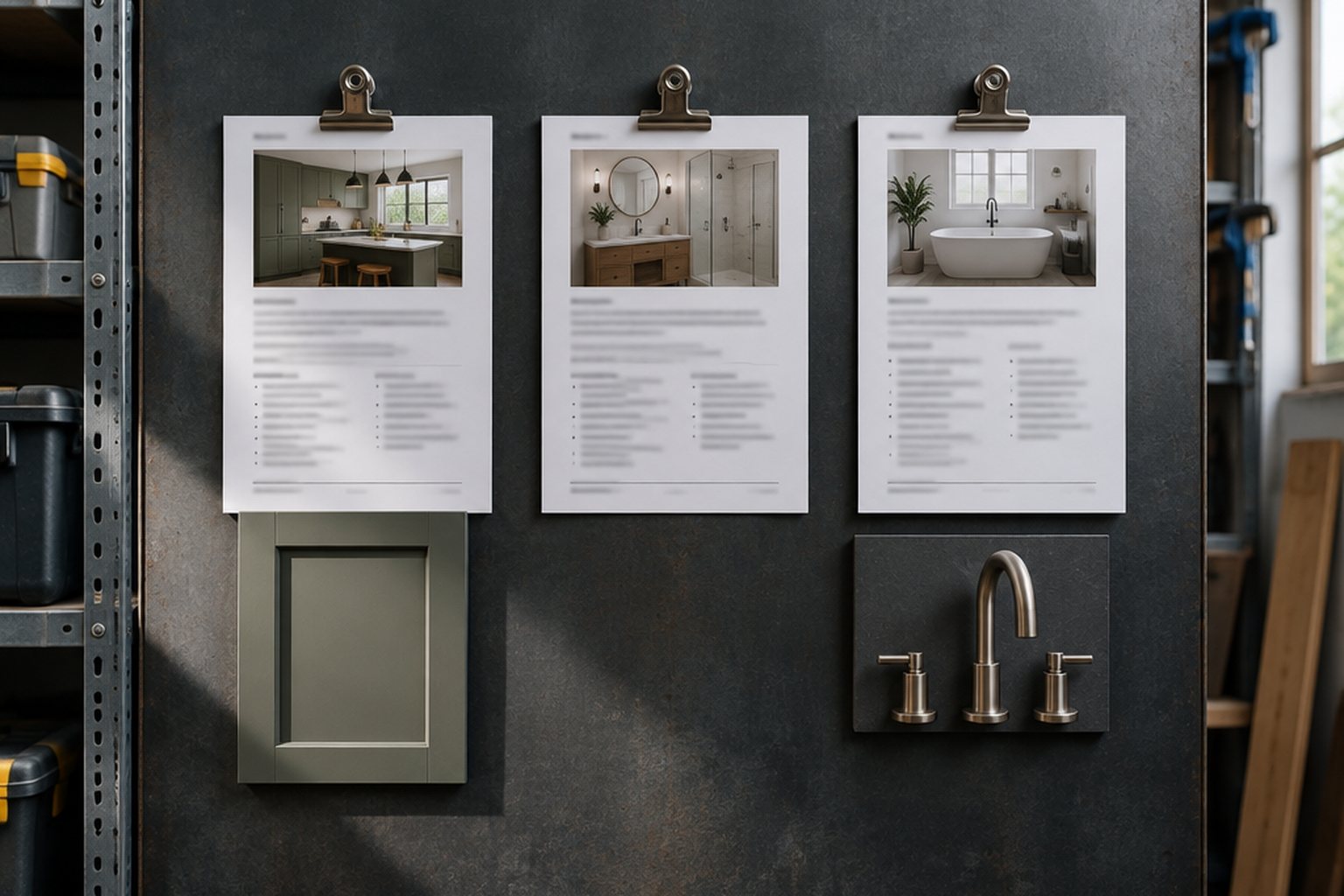
THE SHORT ANSWER
Compare the work and responsibilities behind each remodeling price before comparing the totals. Give every bidder the same project description, then identify differences in quantities, specifications, allowances, permits, protection and exclusions. Ask for revised written scope where a difference matters. A low price may reflect an efficient approach, an omission or more owner responsibility; the total alone cannot tell you which.
Normalize the project description first
Start with a concise scope brief that each bidder receives: rooms involved, existing conditions, intended layout changes, desired finish level and any important access or occupancy constraints. Include drawings or photographs where they help explain the work, while marking unresolved design decisions. If one contractor priced a full bathroom reconstruction and another assumed the shower remains, their totals are answering different questions. Do not hide new information from earlier bidders and then compare their old numbers with a later proposal. Issue the clarification consistently and ask whether it changes scope, cost or schedule. This creates a fair comparison without requiring every company to use an identical estimating format.
Compare scope line by line, not hourly rates alone
Build a comparison sheet with work categories down the side and bidders across the top. Mark each item included, excluded, allowance, unclear or owner-provided. Useful rows often include demolition, protection of retained surfaces, structural changes, plumbing, electrical work, ventilation, substrate preparation, finishes, painting, disposal and cleanup. Do not force an invented price into an unclear cell. A contractor may offer a legitimate lump sum without revealing internal labor rates or profit. What you need is a reliable statement of deliverables and responsibilities. The FTC's guidance on estimates recommends written descriptions of work, materials, completion dates and price, and asking why substantially different estimates differ.
Expose finish and installation differences
Specifications should identify the characteristics that affect the result, not merely a broad label such as tile or cabinets. Compare product model or equivalent criteria, quantities, finish, installation system and preparation assumptions. For example, two countertop prices might differ because one includes sink cutouts, removal, delivery and backsplash treatment while another does not. Treat that as a scope question before calling either price unreasonable. Where a product is not chosen, state the allowance and how the final selection will be reconciled. Avoid choosing an inexpensive finish that requires installation work excluded from the estimate and assuming the original labor price must still apply.
Separate allowances, contingencies and exclusions
An allowance generally reserves an amount for an unresolved item, but the contract must define exactly what it covers. A contingency is money planned for uncertainty, which may sit in your own budget rather than the contractor's price. An exclusion identifies work someone else must arrange or pay for. These categories are not interchangeable. Ask whether taxes, delivery, preparation and installation are included in an allowance and how unused amounts are credited. List concealed-condition assumptions separately. If a contractor excludes all damaged substrate, a low finish price could coexist with significant additional work once demolition reveals the condition. That uncertainty belongs in the comparison before selection.
Check permits and project responsibilities
Identify who prepares necessary drawings, applies for permits, coordinates inspections and supplies closeout documents. Include practical items such as protecting occupied areas, moving appliances, providing temporary facilities and disposing of debris. The South Carolina consumer agency recommends obtaining other bids and putting the details in a written contract. For projects elsewhere, apply the comparison method while checking local requirements independently. A bid that omits permitting responsibility should be clarified, not treated as proof that no permit is needed. Likewise, an owner task can be reasonable if the owner knowingly accepts it and understands its effect on timing and cost.
Use a hypothetical comparison to reveal the real difference
Imagine two bathroom proposals: one includes shower demolition, substrate repairs up to an agreed described extent and a specified waterproofing system; another says shower replacement with no preparation details. The lower total cannot yet be judged as a bargain because a major cost category is undefined. Ask the second bidder to describe its preparation and waterproofing scope and ask both how concealed damage would be evaluated. Do not add an arbitrary percentage to make the estimates look equal. The objective is to expose assumptions and obtain comparable written answers. You may still choose a different method, but you will understand what that choice includes.
Evaluate payment, schedule and change handling together
A complete comparison includes when money becomes due and what evidence establishes each milestone. Identify long-lead purchases, a proposed start window, dependencies and how scope changes affect cost and completion. The California CSLB's contract guidance gives a useful example of detailed scope and written changes, but its legal requirements are California-specific. Elsewhere, use the principle of clear documentation and verify the applicable law. A lower price with heavily advanced payments or undefined changes can create a different risk profile from a higher, more complete proposal. Do not reduce those differences to price alone or assume that the most expensive bid is automatically the safest.
Request a targeted revision and make an informed selection
Send each finalist a short list of unanswered items and ask for a revised proposal or attached clarification. Preserve version dates so an old exclusion does not silently survive alongside a later verbal promise. At selection, retain the comparison sheet and identify the accepted documents in the agreement. The homeowner discussion behind this article described detailed expensive estimates competing with one-line cheaper offers. The useful response is to improve comparability, not demand that every contractor match the lowest number. Select a scope you can afford, a provider whose qualifications fit it and terms you understand, while keeping a separate budget for genuinely unresolved conditions.
BEFORE YOU PROCEED
Your project checklist
- Give every bidder the same scope brief.
- Mark included, excluded, allowance and unclear items.
- Compare preparation and installation specifications.
- Clarify permit, protection and disposal responsibilities.
- Review payment triggers alongside the price.
- Keep the accepted proposal version and written clarifications.
Questions that come up next
Must a contractor provide a detailed breakdown of profit and labor?
Not necessarily. You need a clear scope, specifications, responsibilities and price structure; a lump-sum proposal can be useful without exposing every internal cost.
Should I always take the middle bid?
No. First resolve scope and risk differences. The middle total is not a substitute for credentials, comparable deliverables and payment terms you understand.
EVIDENCE & SCOPE
Sources for this guide
Applies to: US guidance; California contract details are labeled examples, not nationwide law.
Reddit discussions identify questions and experiences, not verified diagnoses or code requirements. Technical claims should be read with the linked primary source, product instructions and local requirements.
- FTC: How To Avoid a Home Improvement Scamgovernment
Federal consumer guidance on contractor vetting, written estimates, agreements, payments and dispute records. State contract and payment rules vary.
- South Carolina DCA: Hiring a Contractor and Avoiding Repair Scamsgovernment
South Carolina consumer guidance on references, licensing, comparison bids, written agreements and common repair-scam warning signs.
- California CSLB: Learn About Home Improvement Contractsgovernment
California contractor-board guidance on written home-improvement scope, materials, dates, permits, payments and changes. Its legal requirements are California-specific.
- Contractors' estimatesreddit
One detailed expensive estimate competes with vague cheaper bids whose scope is unclear. Full thread was available during research. Individual experiences are not legal or technical authority.